Frameworks
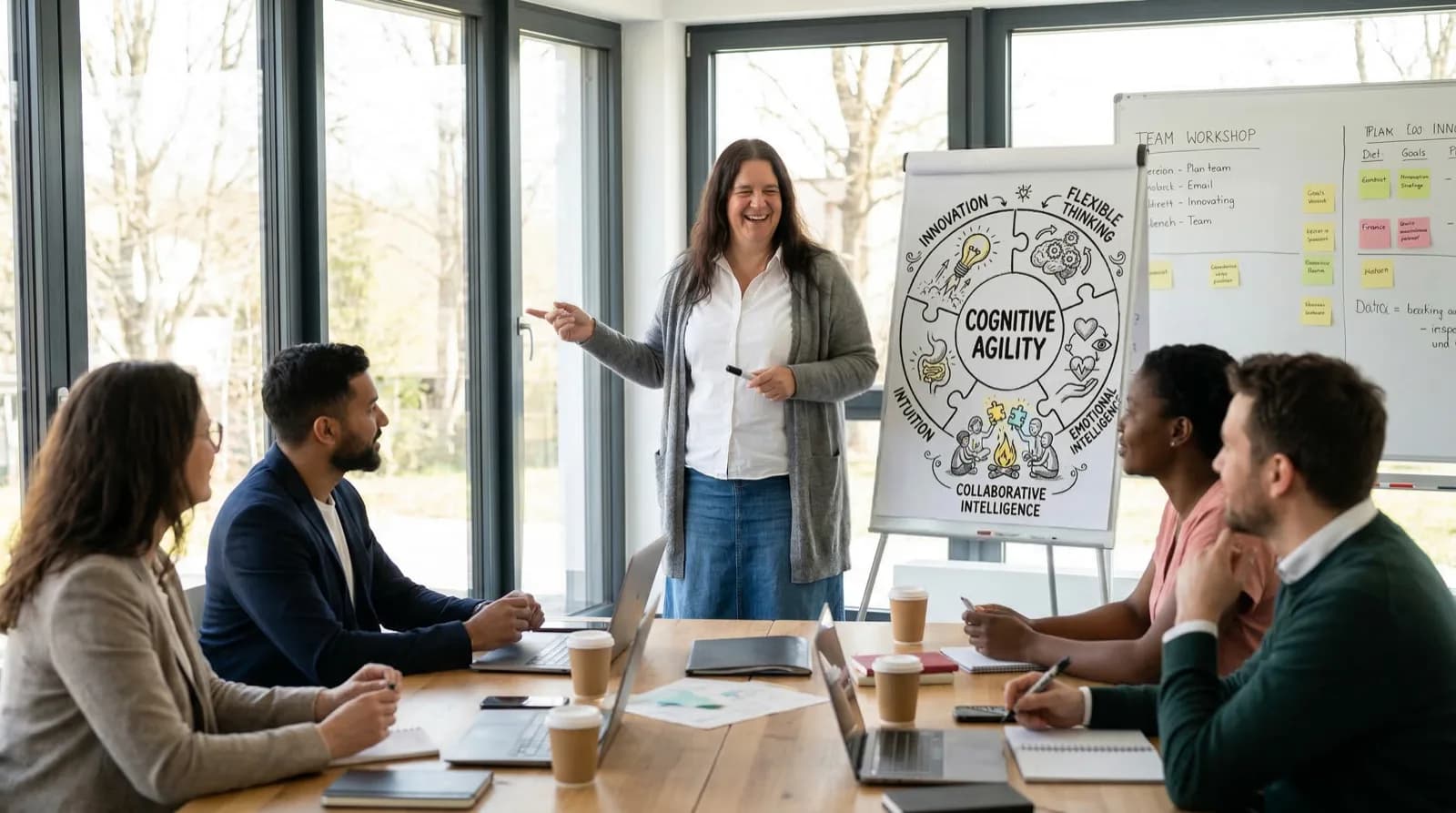
These are the models I've developed through years of working with professionals and teams across Europe. They're practical, field-tested, and designed to be used — not just understood. Each one exists because it solved a real problem for real people.
The Cognitive Agility Framework (CAF)
The core question: which human capabilities matter most when everything else is being automated?
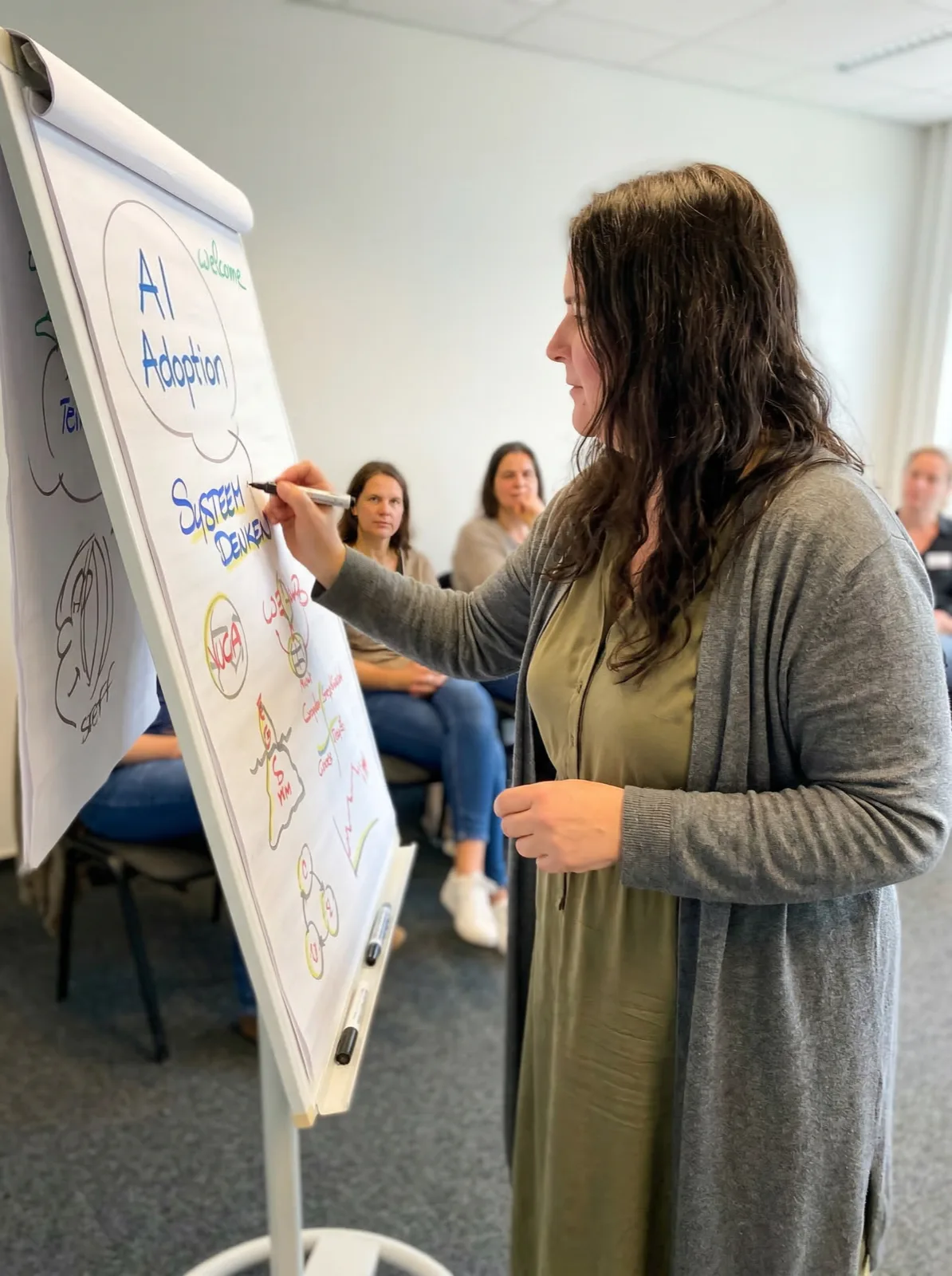
The Cognitive Agility Framework identifies five capabilities that create the most value in an AI-driven world. These aren't soft skills in the traditional sense — they're strategic power skills that compound over time.
The Five Capabilities
1. Flexible Thinking The ability to shift perspectives, challenge assumptions, and adapt your mental models when the situation demands it. In a world of rapid change, rigidity is the real risk.
2. Empathy & Emotional Intelligence Understanding what others need, feel, and fear — and using that understanding to build trust, resolve conflict, and lead with humanity. AI can simulate empathy. Humans can practice it.
3. Deep Collaboration Working together in ways that create outcomes neither individual could achieve alone. This goes beyond teamwork — it's about co-creating value across boundaries, disciplines, and human-AI partnerships.
4. Intuition, Ethics & Leadership Making wise decisions when the data is incomplete, the stakes are high, and the path isn't clear. This is where human judgment earns its keep.
5. Innovation & Value Creation Seeing opportunities others miss. Connecting dots across domains. Creating something genuinely new — not just optimising what already exists.
The Superworker Model
A five-level framework for AI adoption maturity. It helps individuals and organisations understand where they are today and what the next step looks like.
The Five Levels
Level 0 — Status Quo No meaningful AI adoption. Work continues as before. The risk isn't falling behind — it's not knowing that you're falling behind.
Level 1 — Optimize Using AI to do existing tasks faster and better. Automating the routine. This is where most people start, and it's a valid beginning.
Level 2 — Redesign Rethinking how work gets done with AI as a partner. Not just automating old processes but designing new ones that wouldn't be possible without AI.
Level 3 — Reinvent Creating entirely new value. New products, new services, new ways of working that emerge from deep human-AI collaboration.
Level 4 — Elevate Becoming your own entrepreneur-creator-developer, with AI agents as your team. At this level, the distinction between "using AI" and "working" disappears — they're the same thing.
The CRAFTER SuperPrompt Framework
A structured methodology for briefing AI effectively. Available in both meta-prompt enhancement and superprompt creation modes.
The Seven Elements
- C — Context: Set the scene. What's the situation, background, and constraints?
- R — Role: Define who the AI should be. What expertise, perspective, and tone?
- A — Action: Specify exactly what needs to be done. Clear, concrete, measurable.
- F — Format: Describe the desired output format, structure, and length.
- T — Target Audience: Who is this for? What do they know, need, and expect?
- E — Examples: Show, don't just tell. Provide samples of what good looks like.
- R — Refining Scripts/Questions/Rules: Build in iteration. Add guardrails, follow-up questions, and quality checks.
The CRAFTER framework is available as an open-source tool on GitHub.
Using These Frameworks
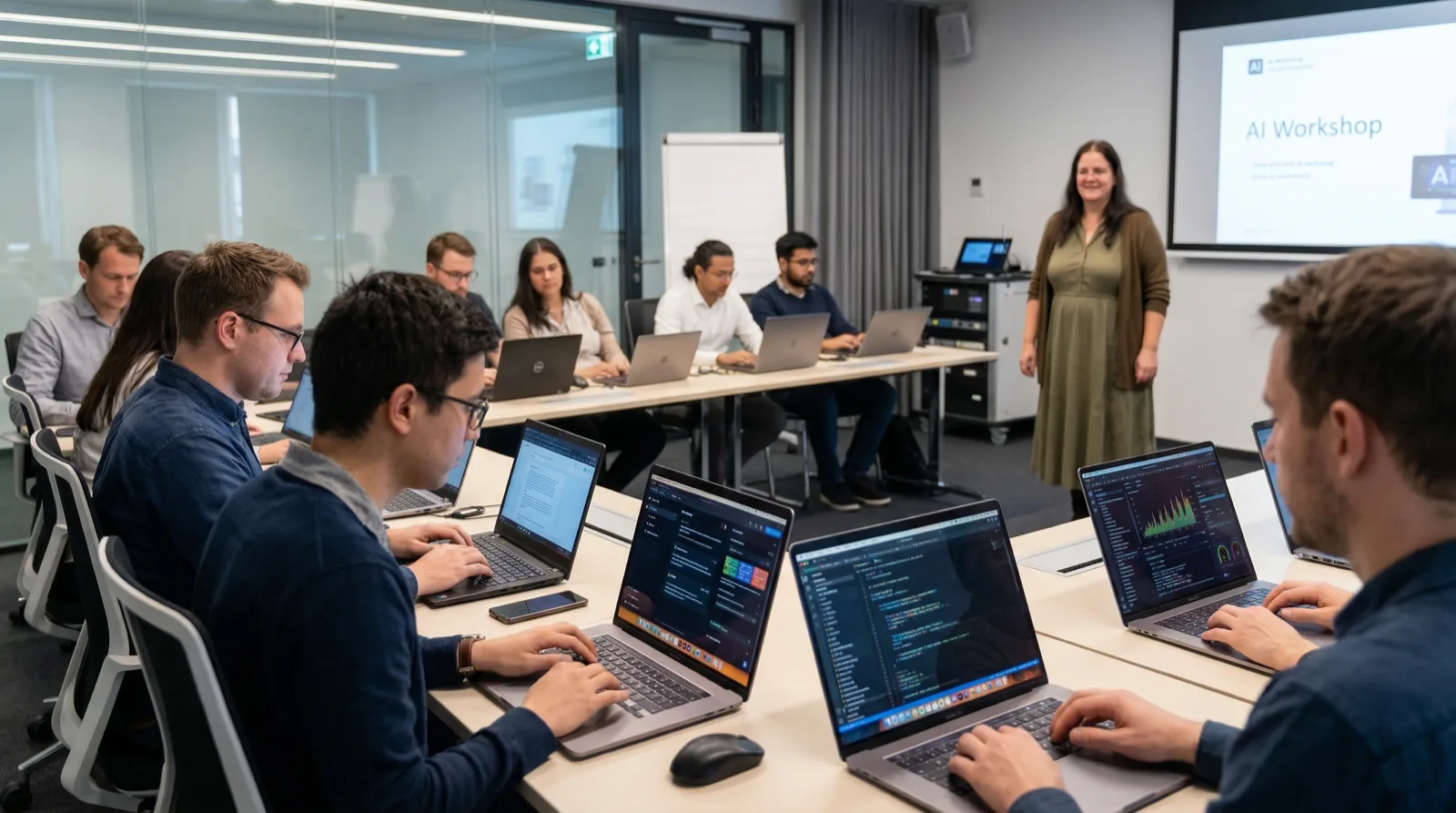
All three frameworks are woven into my training programs and books. They're designed to work together: CAF defines what to develop, the Superworker Model shows the path, and CRAFTER is the daily tool for getting there.
Want to bring these frameworks to your team? Let's talk →