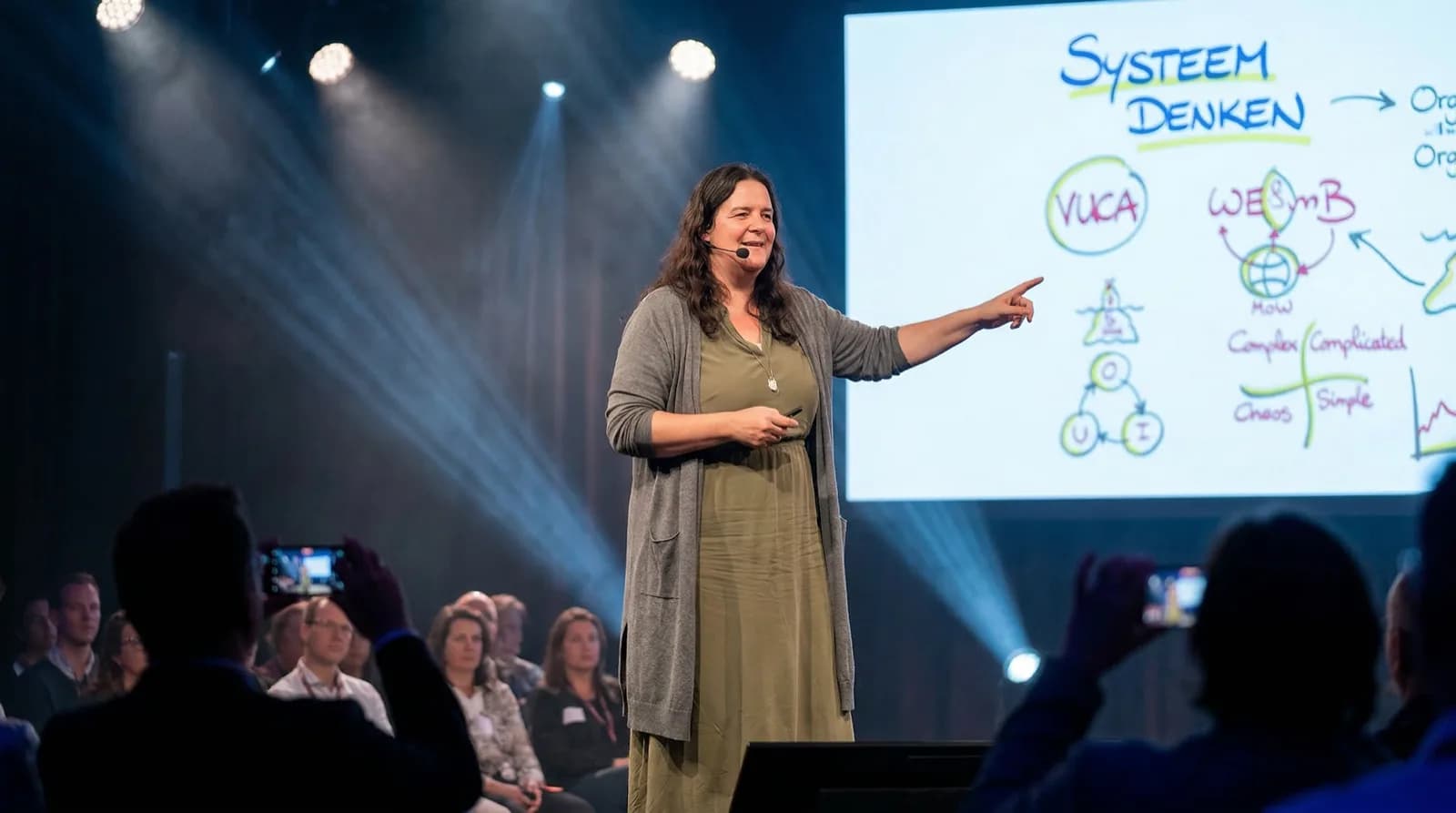
What happens when machines can do most of your job?
The future of work isn't a race against the machine. It's a journey back to what makes us human.
When AI handles the routine — the emails, the first drafts, the data crunching, the scheduling — something profound shifts. The value of what remains goes up. Attention becomes scarce. Judgment becomes precious. The ability to sit with ambiguity, read a room, or make a call that doesn't have a clear algorithm behind it — these become the new hard skills.
We've spent decades optimising for efficiency. Now efficiency is becoming cheap. The question isn't "how do I do more?" It's "what's worth doing at all?"
What is cognitive agility?
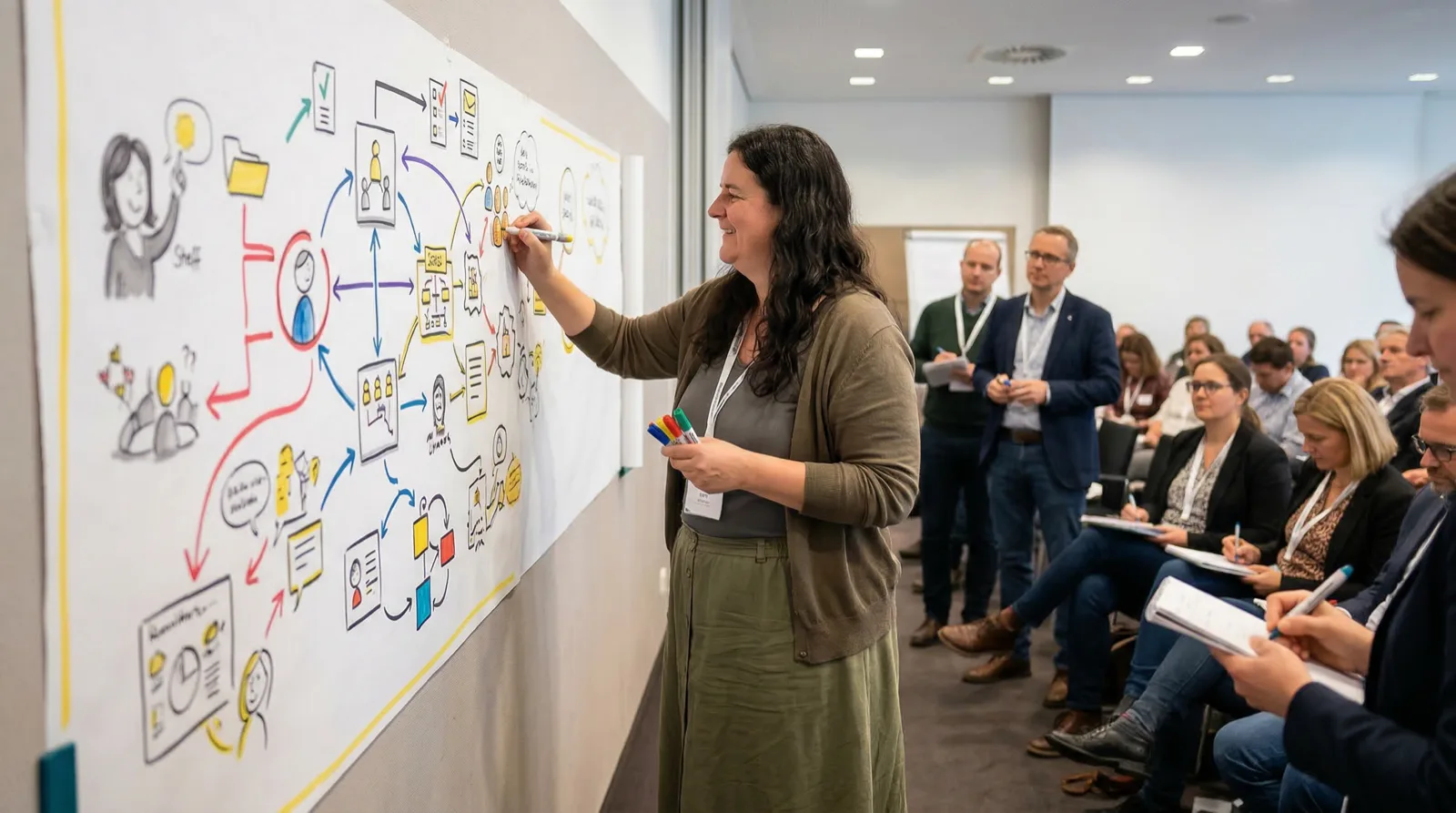
Cognitive agility is the uniquely human capacity to adapt your thinking, emotional, and social approach to navigate messy, unpredictable situations. It's not one skill — it's a meta-capability. The ability to break patterns, reframe problems, and make decisions that weave together data with deep human awareness.
I've identified five capabilities that form the core of cognitive agility. Together, they make up the CAF — the Cognitive Agility Framework. These aren't abstract concepts. They're observable, trainable, and increasingly valuable as AI takes over the predictable work.
Five Capabilities
Coaching & Experience
The Meta-Capability
#metacognition #systemsthinking #reframing
The ability to shift between analytical, creative, and systems thinking — and to know which mode fits the moment. Metacognition, or thinking about your own thinking, is the key. AI operates on patterns from known data. Humans can pause, step back, and ask a completely different question.
#psychologicalsafety #quietdata #presence
Not just understanding emotions — building the trust and psychological safety that make honest work possible. Sensing the "quiet data" in a room. Knowing when someone's silence means agreement and when it means they've checked out. AI has no body, no felt experience, no stake in the relationship.
#sharedmeaning #attunement #cocreation
Moving beyond coordination to genuine co-creation. Shared files aren't shared meaning. Real collaboration requires presence, attunement, and the willingness to be changed by the conversation. AI can facilitate. Humans can collaborate.
#embodiedknowledge #gutfeeling #experience
The embodied knowledge that comes from decades of experience — the gut feeling that something is off before you can articulate why. Intuition isn't the opposite of data. It's what happens when experience integrates faster than conscious reasoning can follow. AI finds patterns. Humans feel them.
#conviction #courage #emergence
Not just generating ideas — creating the conditions for new things to emerge, even in systems that resist change. Innovation requires human conviction, cultural context, and the courage to pursue something that doesn't yet have evidence behind it. AI can remix. Humans can reimagine.
These five capabilities aren't new. But their strategic importance has never been higher. When machines can handle the "what," humans need to own the "why" and the "how."
What is "The Drift"?
Here's the part of the AI conversation that doesn't get enough attention.
When you outsource cognitive work to AI — the research, the drafting, the analysis, the decision support — something subtle starts to happen. The muscles you're not using begin to atrophy. Not dramatically, not overnight. But steadily.
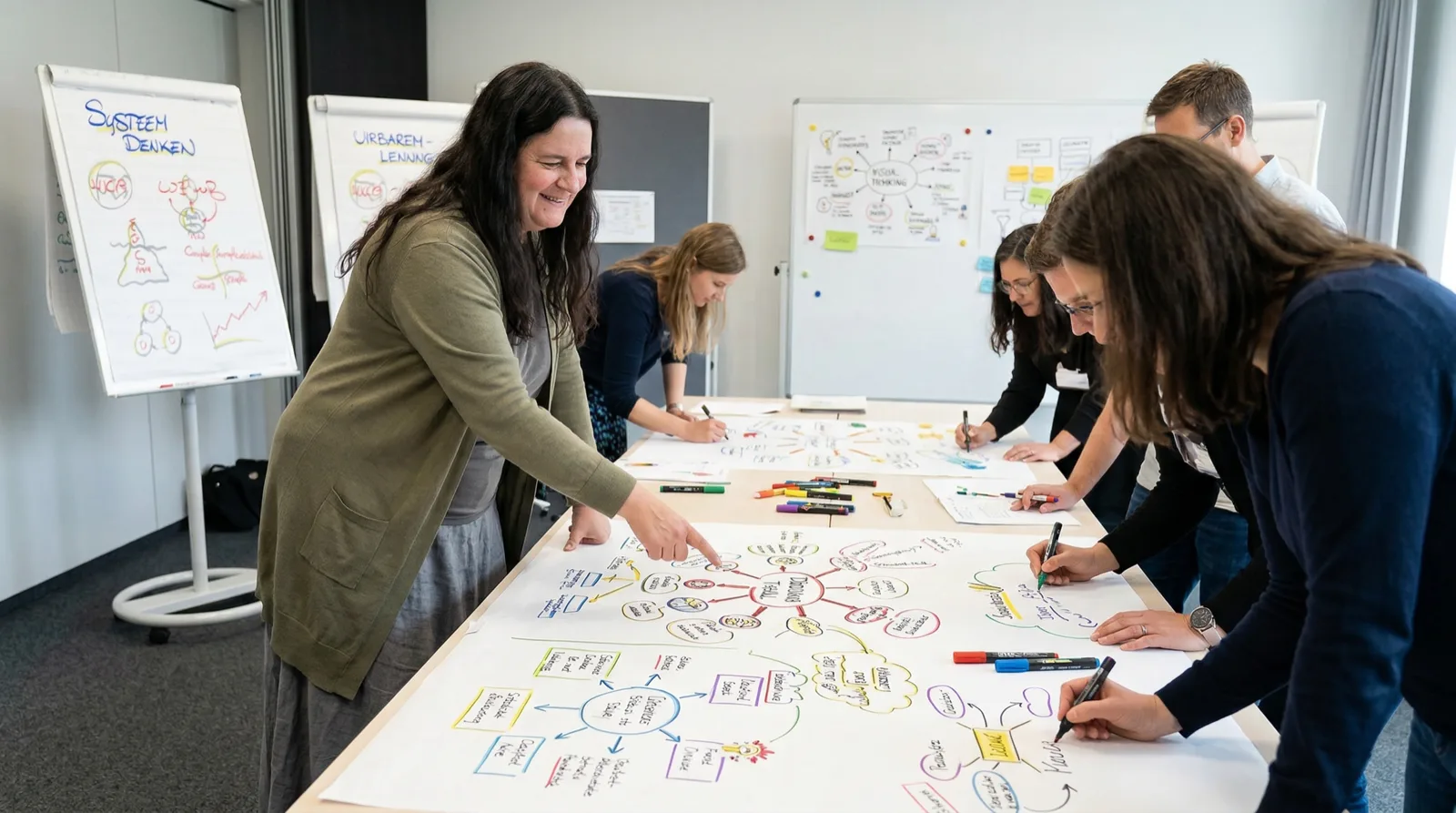
This is what I call The Drift in Finally, Superpowers!. It's not a technology problem. It's a human attention problem. The cure isn't to stop using AI. The cure is to be intentional about which cognitive work you keep for yourself — the work that sharpens your judgment, not just the work that feels productive.
What is human compute?
In the economy of compute, machine cycles are abundant. Processing power gets cheaper every year. But there's a form of compute that remains scarce: human attention, human care, human judgment.
Machine compute — gets cheaper every year, scales infinitely
Human compute — attention, care, judgment cannot be manufactured
These aren't soft skills. They're the scarcest resources in an abundant world. And they're what organisations will pay a premium for as AI handles everything else.
What does this mean for leaders?
If you're leading a team right now, you're navigating three pressure points at once.
When one person with AI can do what a team used to do, everyone's output expectations change. But the workday doesn't get shorter. The scope just expands. Leaders need to be honest about this dynamic instead of pretending it's purely a productivity gain.
Work is becoming harder to see. When your team member builds a workflow that automates half their role, does that make them more valuable or less visible? The old metrics — hours logged, emails sent, meetings attended — no longer measure what matters.
For many leaders, expertise was the authority. "I know how to do this" was the source of credibility. But when AI knows too, the leader's value shifts from knowing to sense-making, from answers to better questions.
The organisations that navigate this well won't be the ones that adopt AI fastest. They'll be the ones that renegotiate what "value" looks like — with honesty, with care, and with an eye on the long game.

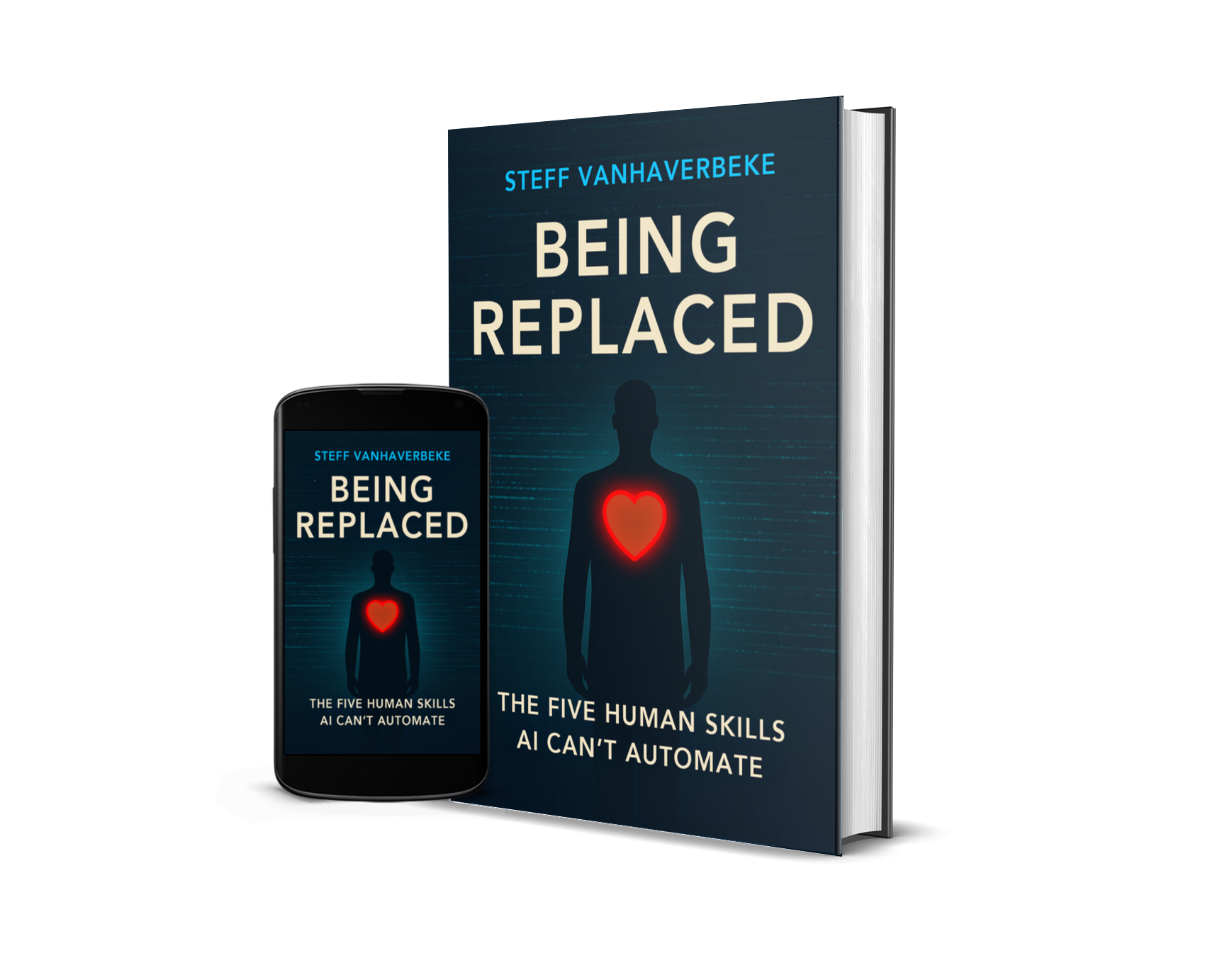
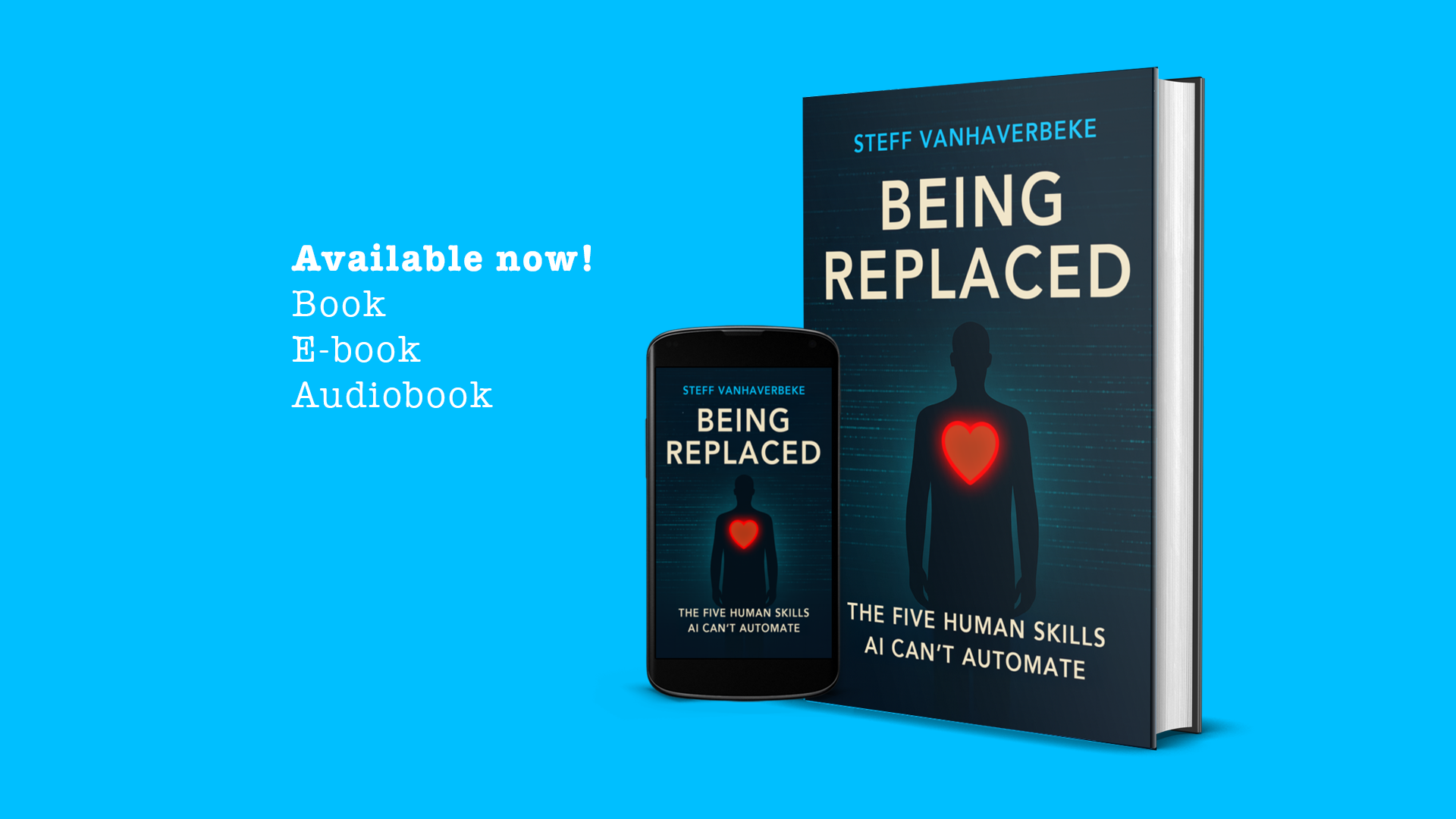
These ideas are explored in depth in Being Replaced: The Five Human Skills AI Can't Automate. Not another AI hype book — a clear-eyed look at what makes humans irreplaceable, grounded in neuroscience and tested in real organisations.
Read more about the bookWhere do you go from here?
Explore how to build these skills in your teamRead the books behind these ideas#cognitive-agility #future-of-work #human-skills #leadership #human-compute