

This page was translated from Dutch with AI.
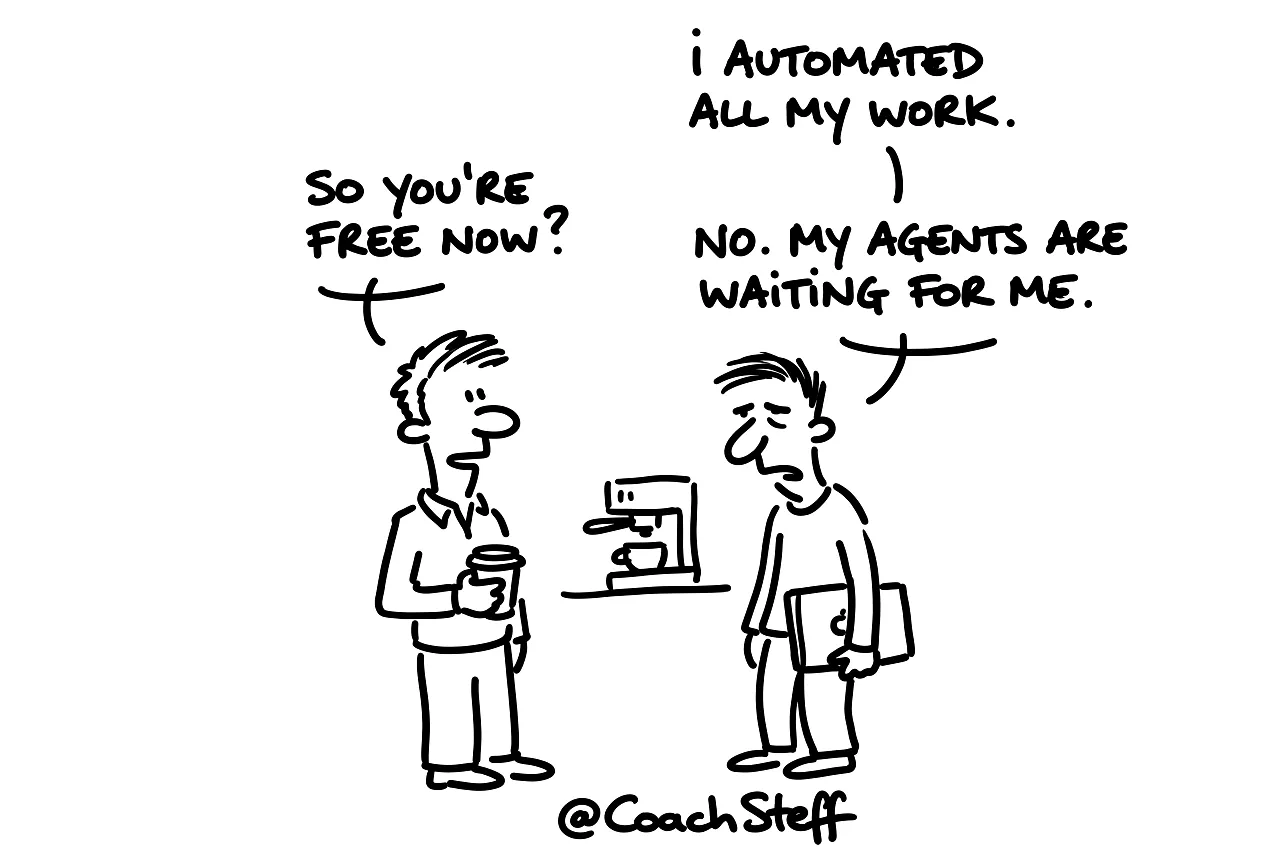
When your agents are all waiting for you
You have put your first agents to work. They book invoices and prepare texts for you. And yet you might feel that your list is not getting any shorter. Every morning there are things ready for you to look at. You probably recognise this: you outsourced the work, but the decisions stayed with you.
That happened to me too, and I talked about it in a workshop on agents. I had started with the mindless tasks, the things that take up a lot of time without me adding anything to them. After that I wanted to get rid of the bottlenecks. I stand in front of a group all day. So everything I have to do, or what someone else needs from me, stands still until I get out of class. And then I noticed that my agents saw me as a decision gate. There was a whole row of little things, spread across my workspaces, waiting for me to look at them. I had built agents to eliminate bottlenecks, and I had become the biggest one myself.
Copy the prompt at the bottom of this article if you want to teach your own agents what they can decide without you.
Why your agents keep knocking on your door
That is actually not because of bad agents. An agent that asks the human when in doubt is doing what it is supposed to do. Every good instruction also contains something like 'ask if you are not sure'. The problem is that every doubt ends up with the same person. And that person has already given most of the answers before.
Just look at what is waiting for you. Can that appointment be on Tuesday? Should this invoice go with the expenses? You often know the answer before you have read the question. Only that answer is in your head, and not in a place where your agent can look it up. So it keeps asking very politely, and it does so very consistently.
That works exactly the same with people, by the way. An employee who bounces every decision back turns their manager into a bottleneck. Delegating well means that you provide frameworks and trust, not just tasks. With agents, the difference is that you literally have to write down those frameworks. And then they are also applied consistently, which is something you cannot say about most colleagues.
Your queue tells you what you have not written down yet
I would say: take your own queue and go through it quietly. For each item you ask yourself if you could predict what you would answer. If so, then that is a rule you have not written down yet. The longer you go through that list, the clearer you see that many of your decisions are actually habits.
Frequently asked questions
Keep reading for free
Register free with your e-mail address and read on. Your account opens the free articles in the learning space; the rest is for subscribers, from Learn Plus up.
Check your inbox
0 likesNo comments yetRead the comments
Comments
Members comment here and read each other's comments. Register for free or sign in to join the conversation.
Register for free or sign inNo comments yet. What do you take away?