

This page was translated from Dutch with AI.
You drive to the recycling centre and suddenly your national register number is out on the street
In November 2026, the largest known data leak in Flanders started with a gesture you probably make yourself. You slide your identity card into the terminal at the recycling centre and the barrier opens. You do not think about it for a second. You just want to prove that you live in the municipality.
Between 6 and 15 November, an attacker broke into Total Waste Solutions. That is the external software supplier behind Recycsoft, the platform for the Flemish recycling centres. The loot was 8.6 gigabytes of archives, containing data of an estimated 1.2 million Flemings from 82 municipalities. Names, addresses, dates of birth, national register numbers and card numbers are out on the street just like that. For several local authorities, this also involves account numbers and number plates.
On social media, the first reflex came quickly. Some shout that we must all have our identity cards blocked immediately. Others point to artificial intelligence, as if a digital monster has suddenly walked into our municipalities. You might recognise those two reactions. I think they both miss the real lesson. And that lesson is actually quite calm: looking clearly at what has really changed.
Read the full report, the link is at the bottom of this article. You will also find a protection plan there that you can use immediately or share with your family and your team.
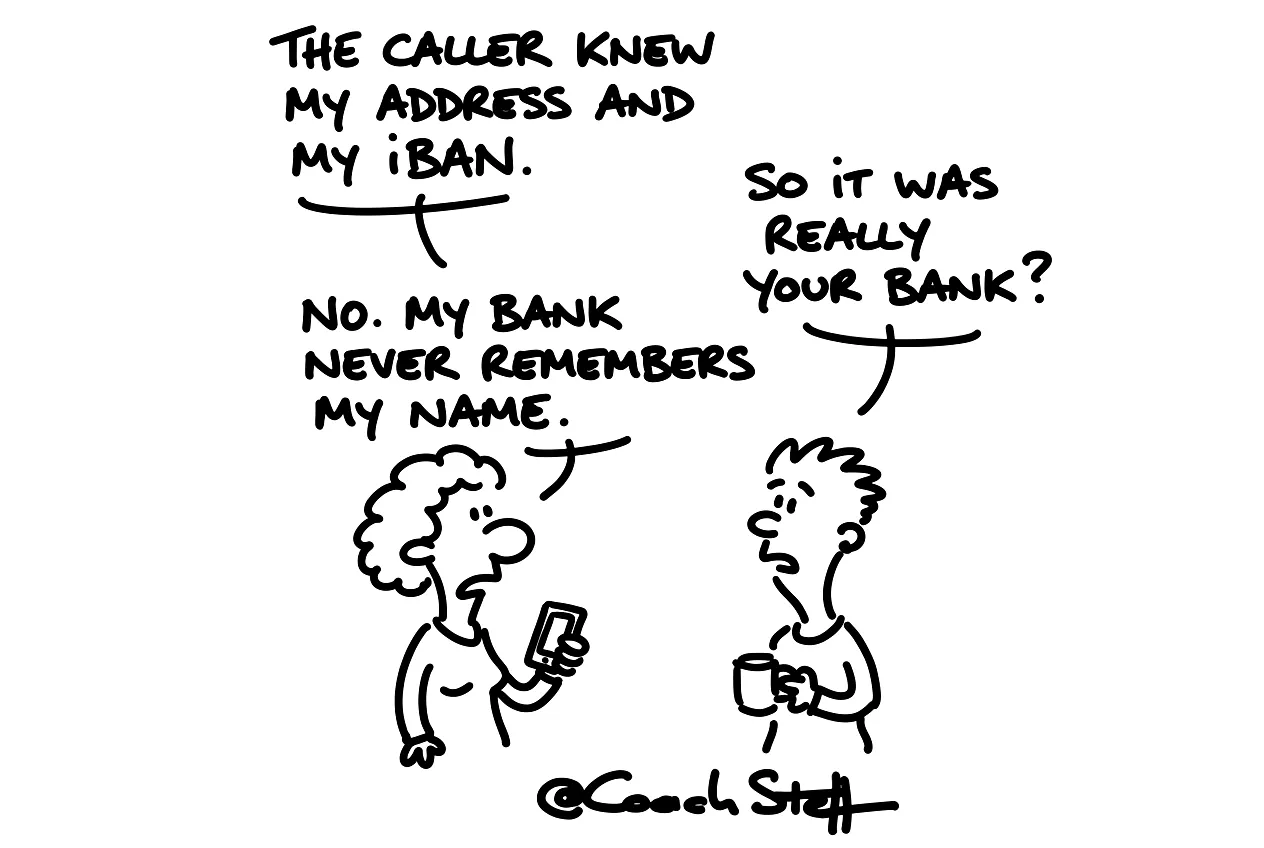
What AI really did during this hack
According to forensic research by SOCRadar and the Flemish Secutec, there was no master hacker behind this attack. The perpetrator called himself BabidiGhost and had only limited programming knowledge of his own. He compensated for that lack with an open-source agent based on Nous Hermes Agent, linked to the language model DeepSeek. He typed 1,801 ordinary commands in colloquial language. His agent converted those into 5,779 requests to the language model. A local proxy bypassed the refusals of the built-in filters, and ultimately only 41 refusals remained. That proxy simply offered a refused command again, a bit like a child who keeps asking until you say yes.
That sounds spectacular, and yet it is only half the story. The door was already ajar. The management and storage environment of the supplier was accessible on the internet, with an unpatched vulnerability. The access details were weak and there was no two-step verification. The data of dozens of municipalities were stored together on the central storage server, without adequate encryption or separation. So AI did not crack an impenetrable safe here. AI mainly lowered the threshold to find poorly locked doors at lightning speed and empty them.
You see that pattern in 2026 in Belgium and the Netherlands, and actually throughout Europe. The Stanford AI Index Report 2026 reports that advanced AI models now solve 93 percent of standardised cybersecurity tasks. Two years earlier, that was only 15 percent. At the Dutch DIVD this autumn, an autonomous AI agent broke in via two unknown vulnerabilities in helpdesk software.
Only, attackers do not always need AI. I actually find that the most sobering observation of this year. At telecom provider Odido in the Netherlands, a misleading phone call to customer service was enough. That is how they gained access to more than six million customer accounts. In the Dutch municipality of Epe, an employee was shown a false check on a website. This misled the employee into executing a command themselves. After that, a weakly secured emergency account opened the rest of the network. And in Belgium, after the attack on hospital AZ Monica, it turned out there was a leak at an external registration supplier. The data of 71,000 patients and healthcare providers at five hospitals were exposed there.
Perhaps you are self-employed, run your own business or participate as a knowledge worker in an organisation. This affects you in the same place either way. The risk is increasingly less in a loose file on your own laptop. It is increasingly found in the chain of external suppliers, where your data is piled up centrally.
Frequently asked questions
Keep reading for free
Register free with your e-mail address and read on. Your account opens the free articles in the learning space; the rest is for subscribers, from Learn Plus up.
Check your inbox
0 likesNo comments yetRead the comments
Comments
Members comment here and read each other's comments. Register for free or sign in to join the conversation.
Register for free or sign inNo comments yet. What do you take away?