

This page was translated from Dutch with AI.
It is better to start a new chat after a break
You have been working on a report with your AI all morning. It is going well, the chat has become long and your AI knows exactly where you want to go by now. Then it is lunchtime. You go eat, you do the washing up and you pop in to see a colleague. An hour later you are back behind your screen and you type just one more small question into that same chat.
That question seems like the smallest of the day. And yet it is actually the most expensive. I explain this every time in my training courses on Claude and Copilot, because hardly anyone knows it. And fortunately it is easy to solve.
Copy the prompt at the bottom of this article. With that you let your AI write a hand-off before your break.
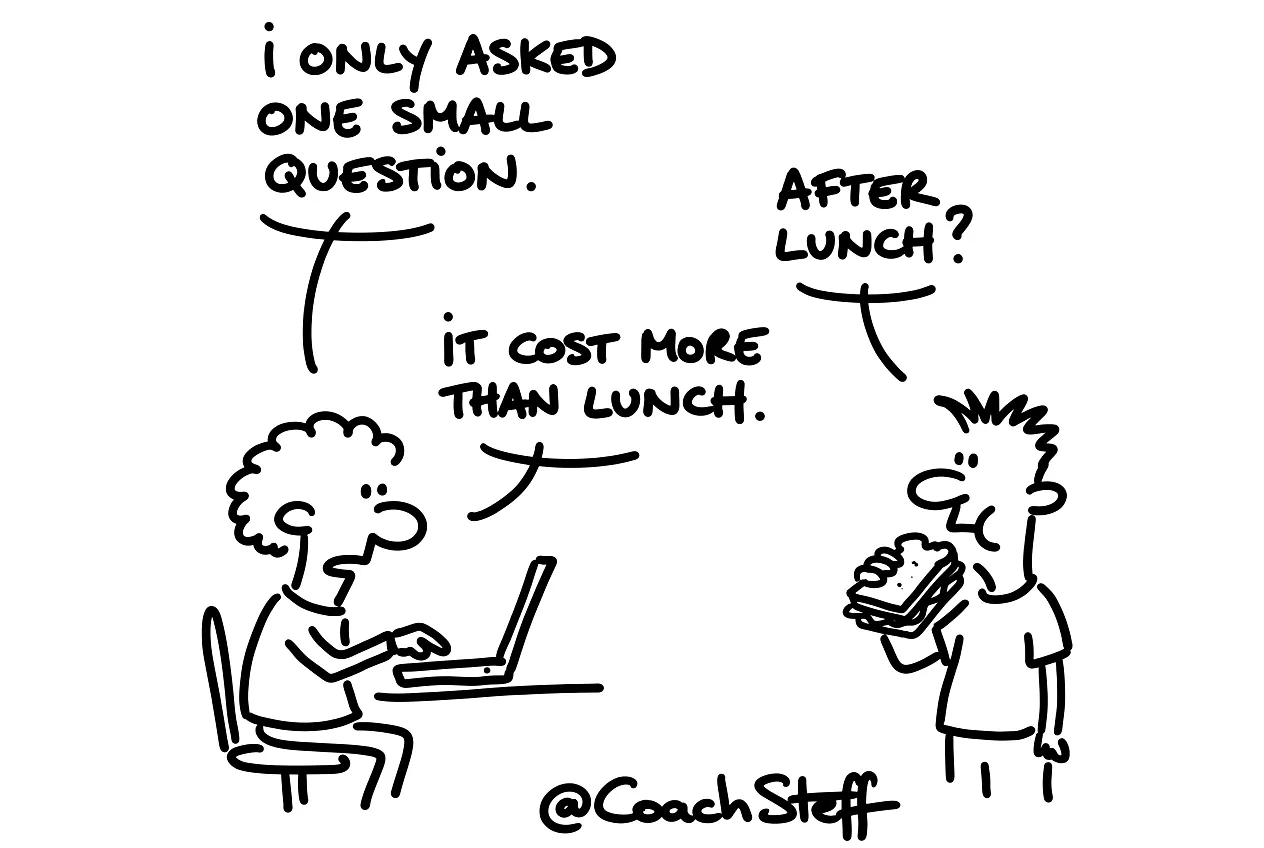
What happens while you eat
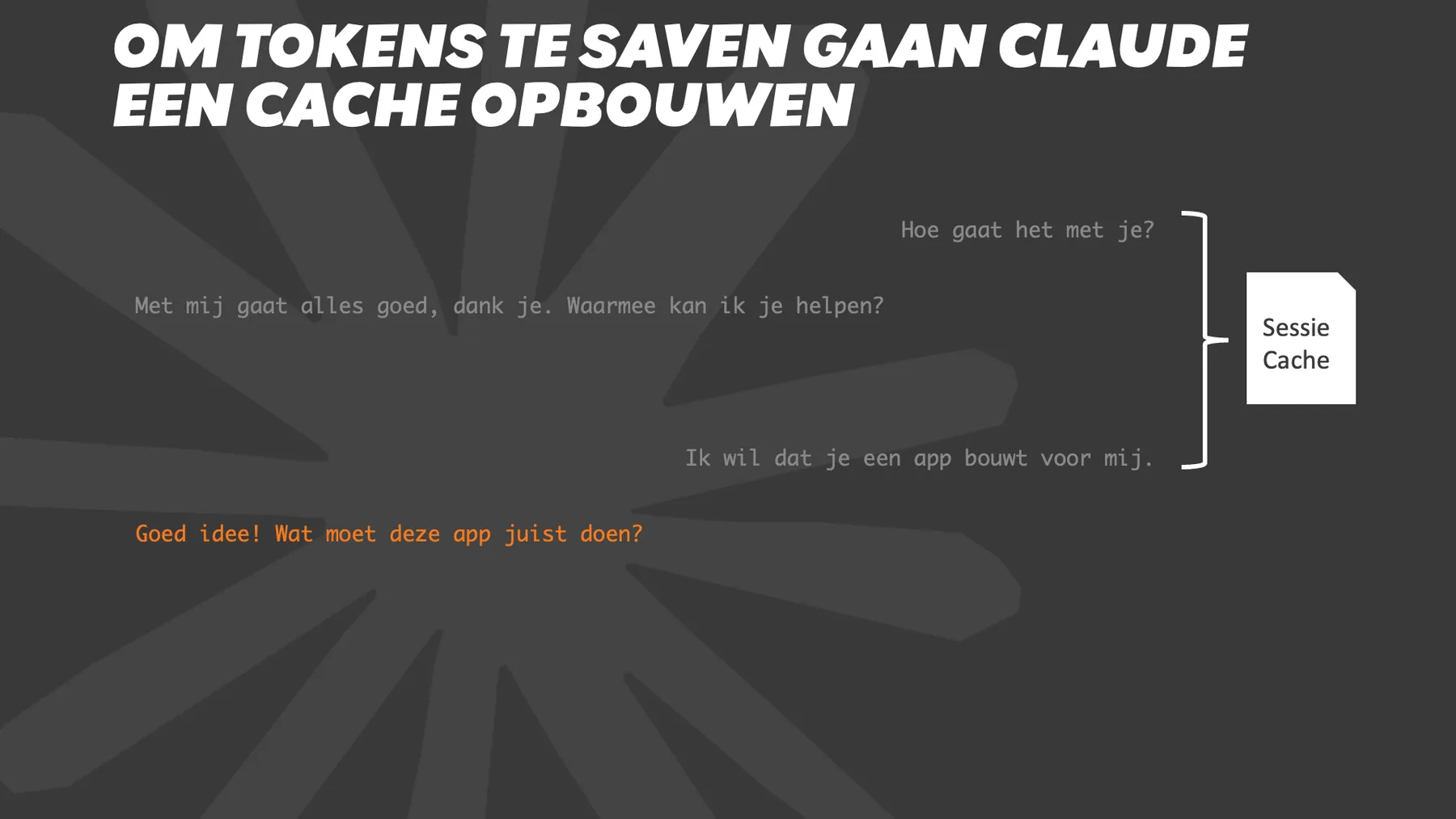
Every time you ask something in a chat, your AI reads the whole chat again. All your questions and all its answers, and also the documents you provided with it. That actually costs tokens every time. So the longer the chat, the more every new question costs.
To keep that somewhat affordable, Claude, ChatGPT and Gemini park that piece of chat in a cache. That is a kind of memory aid in the background. As long as that is there, the model does not have to go through everything from the beginning. But keeping such a cache also costs the provider money. So they clear it after a while. Depending on your tool and your settings, that is after a few minutes or after an hour.
At my house it goes something like this. I am working on something and then we have to eat. After that we still have to do the washing up and feed the dogs and cats. An hour and a half later I am back at my chat. And at that moment the cache is long gone. So my animals also cost me tokens, and to be honest I had not calculated that when they came to live with us.
Your AI then has to pull that whole chat back through its context window. In some tools you will briefly see 'refreshing session'. That is the moment your subscription or your budget takes a big hit.
Frequently asked questions
Keep reading for free
Register free with your e-mail address and read on. Your account opens the free articles in the learning space; the rest is for subscribers, from Learn Plus up.
Check your inbox
0 likesNo comments yetRead the comments
Comments
Members comment here and read each other's comments. Register for free or sign in to join the conversation.
Register for free or sign inNo comments yet. What do you take away?