
This page was translated from Dutch with AI.
Not every workflow is a chain
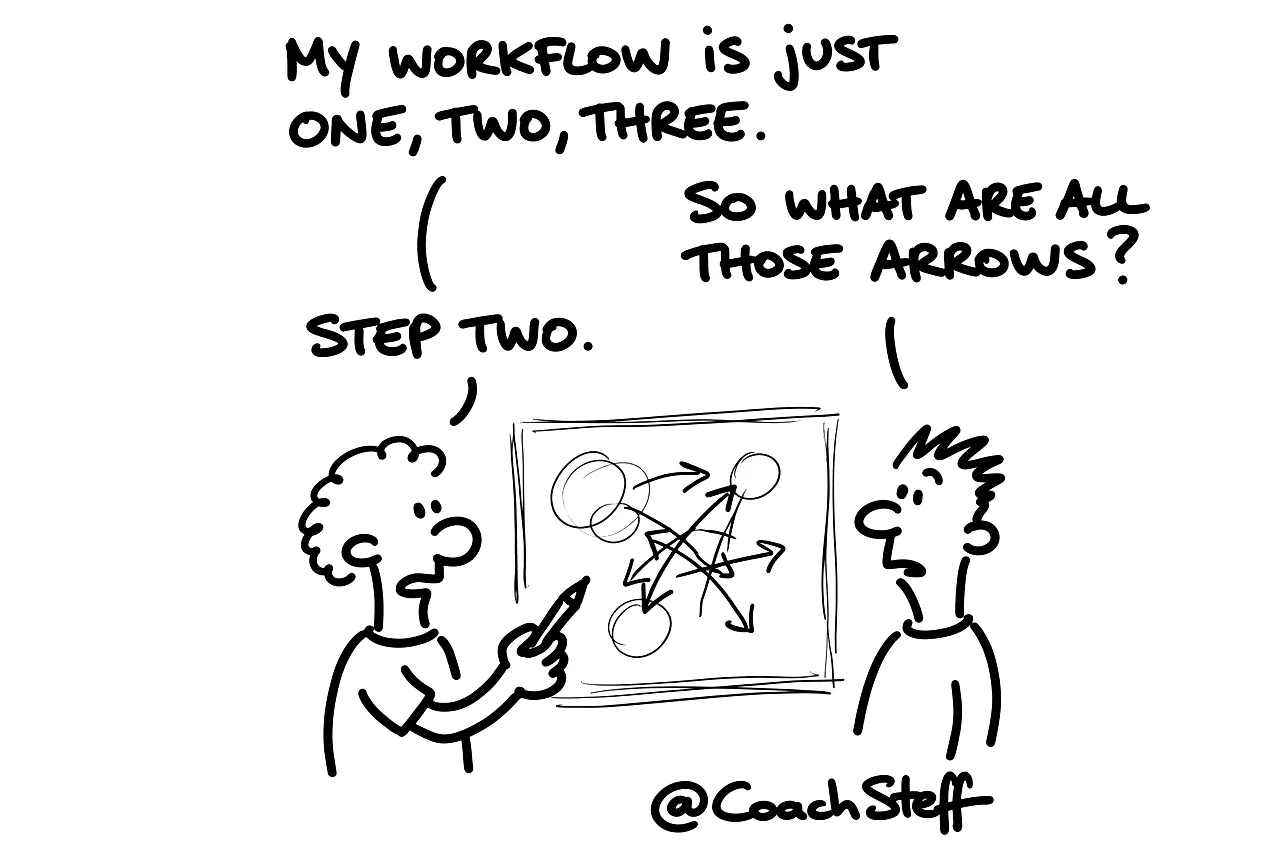
When I ask people to describe a workflow, I almost always get a list. First I do this and then that. That is just how we think. This week I saw it again in a training, when we started building skills. Everyone wrote their steps neatly below each other.
That is actually a good start. But a lot of work does not run in a straight line. And the better you see the shape of your work, the better you know what to ask your AI. So in that training I showed a few shapes, with examples from my own work.
At the bottom of this article is a prompt you can copy to see the shape of your own work.
Chains and branches

Everyone knows the chain. Step one, step two, step three. That works well for a task that always goes the same way. An invoice that comes in, gets checked and gets booked, for example.
A branch is a bit different. There, one input goes off in different directions. For me, that is very concrete. When I am in the car after a training day, I record a short report of the day. What have I been working on, what needs to be followed up? That report is actually fuel for my agents. One agent extracts ideas for new articles from it. Another extracts actions that still need to happen. It is one recording, but it feeds multiple processes at the same time.
Frequently asked questions
Keep reading for free
Register free with your e-mail address and read on. Your account opens the free articles in the learning space; the rest is for subscribers, from Learn Plus up.
Check your inbox
0 likesNo comments yetRead the comments
Comments
Members comment here and read each other's comments. Register for free or sign in to join the conversation.
Register for free or sign inNo comments yet. What do you take away?