

This page was translated from Dutch with AI.
Let everyone think alone first, then together
At every conference there is someone who has waited the whole presentation for one moment, the Q&A. And then he asks a question that makes the whole room go quiet, and not in a good way. Everyone wants to go to the toilet, or have lunch, or just leave. No one wants to watch a discussion between two people for another half hour.
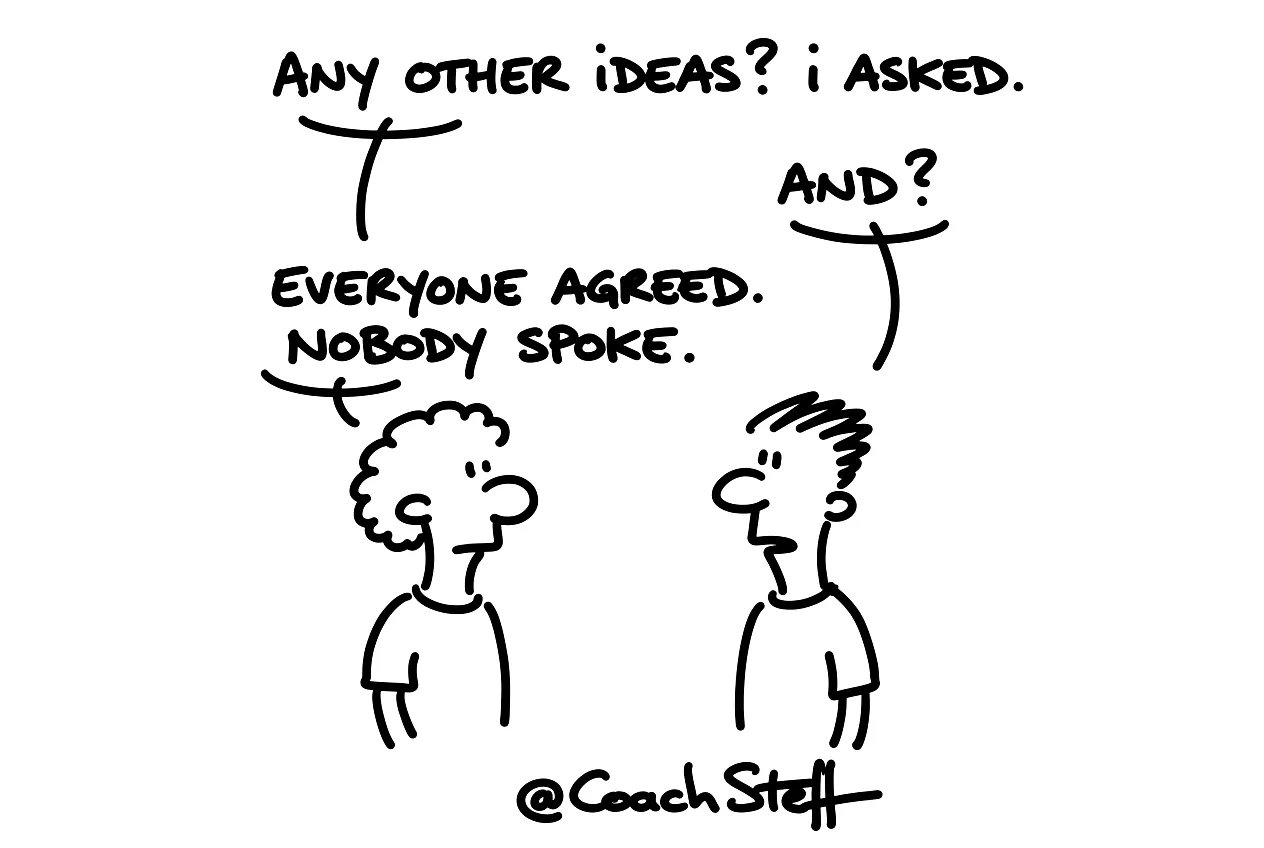
In your own meetings it probably looks a bit smaller, but the mechanism is the same. A few people do all the thinking and the rest just sit there. You ask if anyone else has an idea, and it stays quiet. A participant in a training on facilitating meetings literally told me she ran into this: she asks for input, and from some people it just never comes.
That is usually not down to those people. It is down to the format in which you let them talk. At the bottom of this article you will find a prompt that rebuilds an agenda item for you into such a format. Feel free to copy it.
First the question itself
To start with, 'Does anyone else have an idea?' is actually a closed question. You can answer yes or no to it, and no is the easiest answer. An open question starts with a question word: how, when, in what way. That gets people thinking. That alone makes a difference, but it does not yet solve the fact that the quiet people stay quiet.
Alone, in pairs, in small groups, and then together
I use a technique for that called 1-2-4-All. The idea is simple: you give people tasks, in groups that get bigger step by step.
First everyone thinks alone. I say for example: everyone take a piece of paper and write down the five things that are most important to you. And then everyone is writing. That works because thinking for yourself feels very natural. Everyone can do it, everyone is busy and everyone is on topic.
Frequently asked questions
Keep reading for free
Register free with your e-mail address and read on. Your account opens the free articles in the learning space; the rest is for subscribers, from Learn Plus up.