
This page was translated from Dutch with AI.
Use their words, not yours
In a workshop on emotional intelligence this week, I did a short demonstration with a participant. Afterwards, we discussed with the group what had happened. Most had seen that I adjusted my posture. What stood out less was the most important thing: I had used her words. Literally.
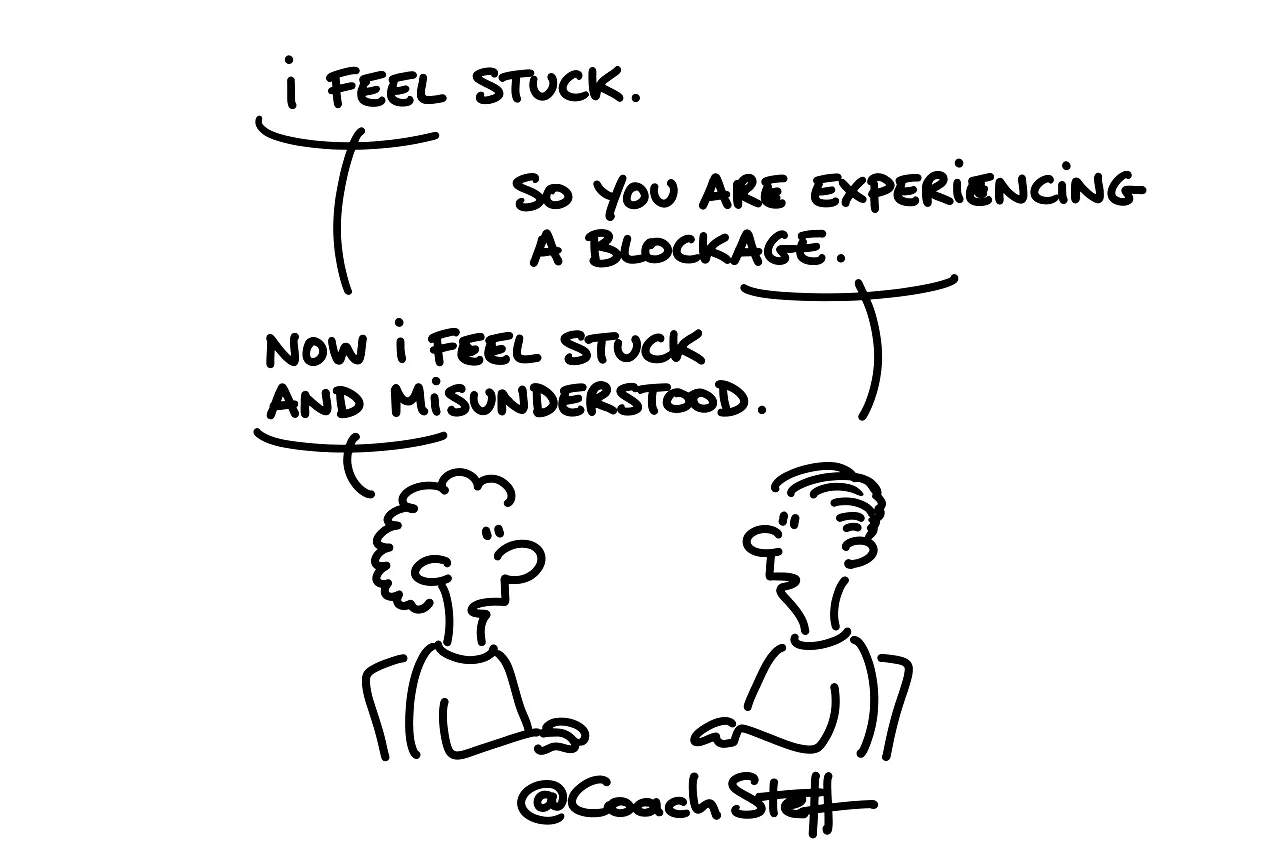
Paraphrasing feels like listening
We all learn that listening well means summarising what the other person says, in your own words. That is paraphrasing, and it seems respectful. You show that you have understood it, you have even processed it.
Except something subtle happens. You choose a word that means the same to you, or that is even a better word for you. But that word belongs to your world, not to that of your conversation partner. Suppose someone says she is stuck, and you reply that she is experiencing a blockage. To you, that is the same. To her, it is a slightly different world, and she feels that, even if she cannot name it.
That small difference is a mismatch. And a mismatch breaks the connection, just for a moment, right at the moment you wanted to strengthen it.
Keep reading for free
Register with your e-mail address to read the whole article. It is free, and it opens every article and programme in the learning space.
Check your inbox
We've sent you a sign-in link. It works for 30 minutes. Nothing there? Check your spam folder too.