

Ask your question
A quick question or a specific request? I will answer you personally.
This page was translated from Dutch with AI.
Practical AI techniques that actually work: briefing AI properly, automating workflows with AI agents, being found by AI assistants (GEO) and a different perspective on your work.
AI does not make you faster at the wrong things. The professionals who truly get value from AI are not the ones with the most tools. They are the ones with a system to look at their work differently.
That system starts with a question most people skip: which parts of my work need my judgement, and which can AI take over? If you make that distinction well, everything changes. You stop asking AI random questions and start building workflows that handle entire processes.
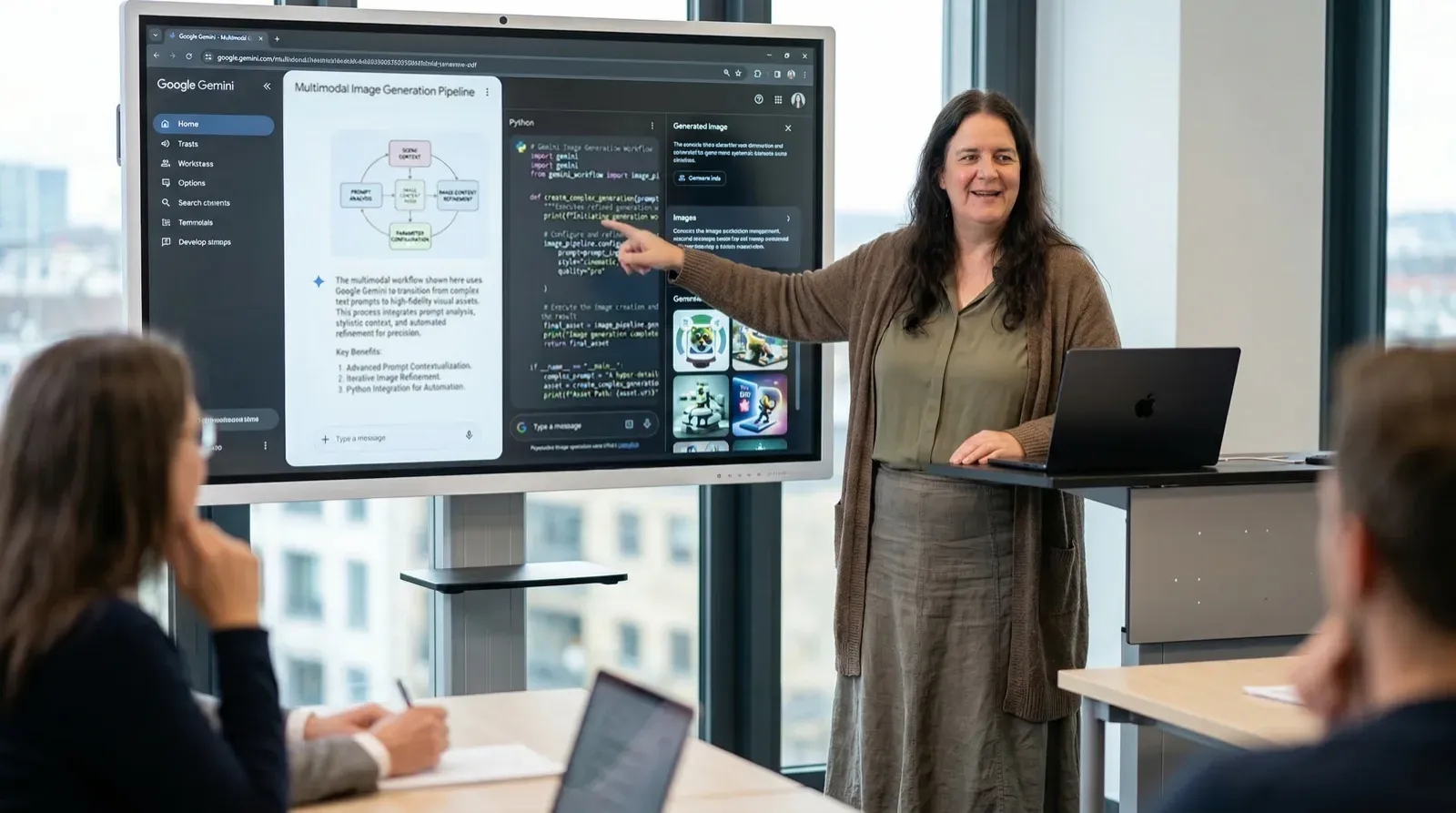
More and more people no longer search via Google, but ask an AI assistant. It gives one answer, with a handful of sources. If you are not among them, you do not exist for that client. Tackling this is called GEO, generative engine optimization: building your website, your texts and your profiles in such a way that AI assistants find, understand and cite them. It looks like SEO, but it requires something else: clear answers to real questions, clear facts about who you are and what you do, and a site that machines can read smoothly.
There is a shift happening that most people have not realised yet. We are moving from asking AI questions to directing AI workflows.
A chatbot waits for your input and gives you an answer. An AI agent gets a goal, breaks it down into steps, uses tools and delivers a result. The difference is like the difference between asking someone for directions and hiring a driver who knows the route.

Anyone who directs agents must think clearly about what matters. Agents amplify your intentions. If your intentions are fragmented, your agents will be too.
Briefing AI properly: not just writing better prompts, but giving AI the context it needs: who you are, how you work, what good work is. This way you get usable results every time, instead of getting lucky once.
Workflow automation: using platforms like n8n to connect AI to the tools you already have. Processing emails, content pipelines, data analysis, client communication: automated, with AI in the loop where it adds value.
Creating content with AI: from first draft to final version, with AI as a writing partner that handles structure and research, while you bring your voice, your judgement and your expertise.
Model Context Protocol (MCP): connecting AI directly to your databases, documents and business tools. This is where AI stops being a separate application and becomes a part of how you work.
GEO: building your website and your texts in such a way that AI assistants find and cite you when someone asks a question about your field.

There is a pattern I see in almost every team I work with. Someone discovers a new AI tool, gets excited, uses it for a week and then forgets about it. Three months later that person discovers another tool. Same cycle.
The problem is not the tools. The problem is that no one paused to ask the question: what do I actually want to achieve, and what does a good workflow look like?
I call this the AI Tool Trap. The solution is not fewer tools or more tools. It is stepping back far enough to see the system. In my workshops we call that moment the Sacred Pause: the discipline to think first and only then automate.
Choose what suits you.
A quick question or a specific request? I will answer you personally.
Thirty minutes to explore what you need together, without a sales pitch.
Become a free member of Learn and read all articles in full. If you want to go further, you can grow into Leverage and Leap.
Hi! I'm Steff's AI assistant. Feel free to ask me anything about her work, her books or how you could work together.
Answers are AI-generated from this site and may contain mistakes. Questions are stored without your name or IP address to improve the site. Please do not share personal details.