

This page was translated from Dutch with AI.
Six coloured cards and no advice
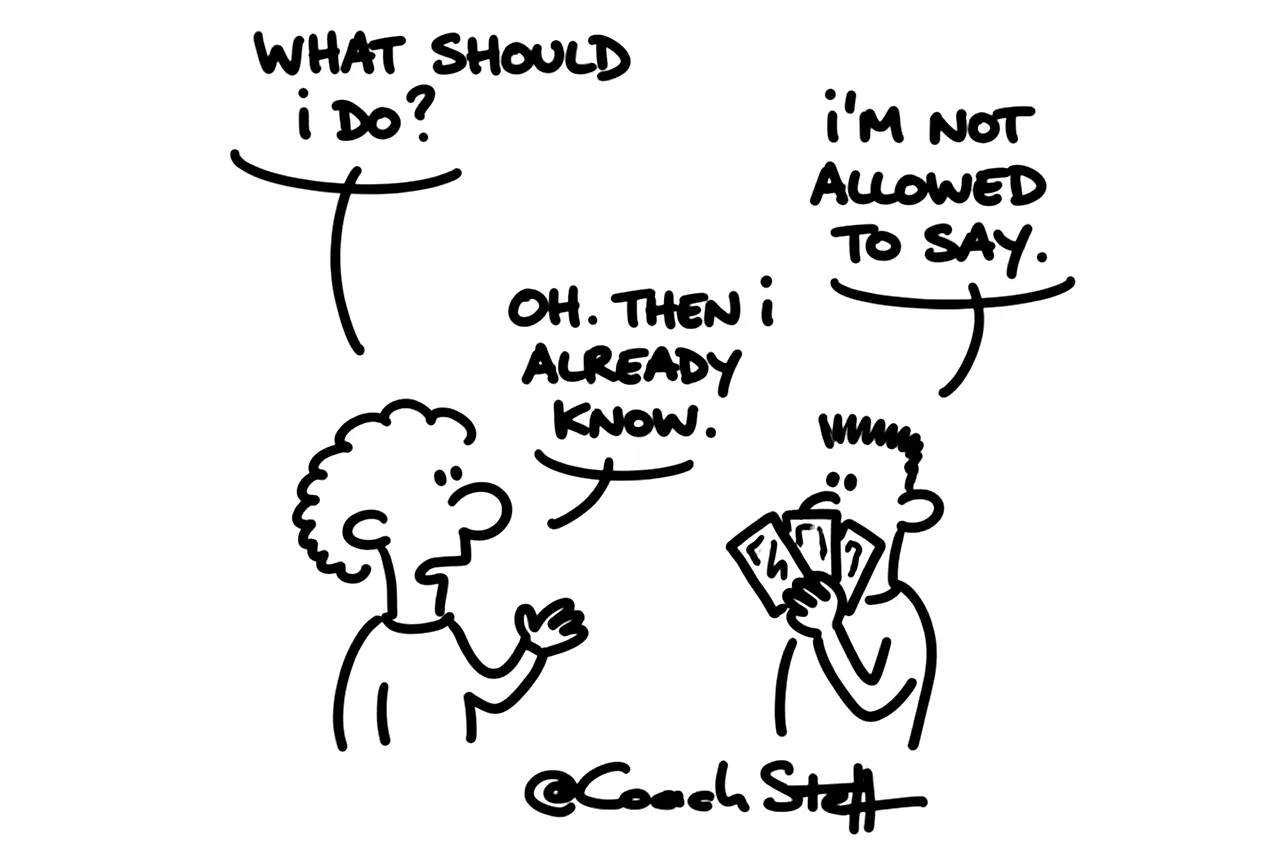
Perhaps you want to help a colleague with a difficult decision and you quickly offer solutions. We all do that. There is one exercise from my creativity workshop that participants almost always take home with them. You need six coloured cards for it and one strict rule: you must not give advice.
Copy the prompt at the bottom of this article if you have no one to practise with, and let your AI hold up the cards.
How the exercise works

You work in a duo or a trio. One person talks about an idea or a challenge they are working on. That must be something real, not a fictional case. The other listens, with six coloured cards in their hand.
Those colours come from the Six Thinking Hats by Edward de Bono. White stands for facts and for what you do not know yet. Red stands for feeling and intuition. Black for critical thinking and risks. Yellow for opportunities and what is good. Green for new ideas. And blue for the overview: where are we, and what is the next step.
While the speaker talks, the listener holds up the card that matches what he or she hears at that moment. The listener actually does nothing more than that. They do not give ideas and tips, and no 'have you tried to' either. At most, they ask a question that helps the speaker to think further.
Frequently asked questions
Keep reading for free
Register free with your e-mail address and read on. Your account opens the free articles in the learning space; the rest is for subscribers, from Learn Plus up.
Check your inbox
0 likesNo comments yetRead the comments
Comments
Members comment here and read each other's comments. Register for free or sign in to join the conversation.
Register for free or sign inNo comments yet. What do you take away?