

This page was translated from Dutch with AI.
Start on time, even if not everyone is there
You are ready for a ten o'clock meeting. At five past ten, someone is still missing. So everyone waits. People chat a bit and check an email. And at quarter past, it finally starts. You probably recognise this, and perhaps you even find it normal. I think almost everyone experiences it like this.
In a training course on meetings, I started punctually at the agreed time. Even if not everyone had been there, I would have started. I asked the group why I find that so important. The answer came immediately: otherwise all the others are just sitting around waiting. And that is a waste of time.
Copy the prompt at the bottom of this article. With it, you let your AI check your calendar for next week for meetings that could be shorter.
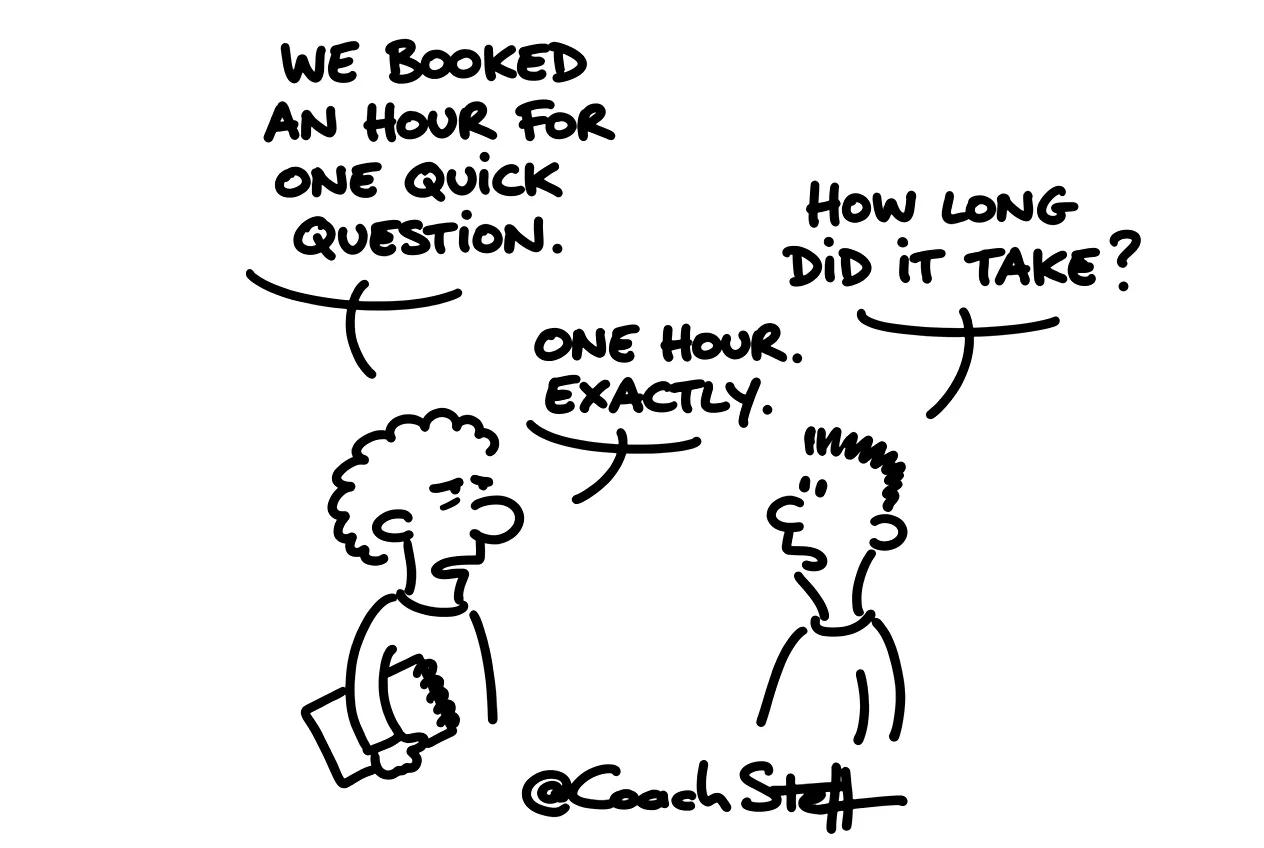
Why waiting for one person costs everyone
Work it out for your own team. If you sit waiting with ten people for fifteen minutes, a significant chunk of working time is gone altogether. And it is about more than time. People come in with a certain focus, because they have prepared. While you wait, they look at their clock. By the time you start, they are already a bit distracted.
So I always start exactly on time, and I also stop exactly on time. For me, one word belongs to that: respect. Respect for each other's time, and for the people who were on time.
A participant did not find that so easy. What if the very person who has to decide is missing? That is a valid question. Suppose that person is ill, or is stuck in traffic after an accident and only arrives an hour and a half later. Then you are also without a decision maker. And you do not cancel the meeting then either while all the others are there, do you? I would start with what you can do without that person.
If it happens time and again, I would simply raise the issue. You say for example: 'I notice that it is difficult to start on time. Is it not better that we schedule for another time?' You can also hold people with responsibility accountable for their responsibility. We sometimes do not quite dare to do that. Yet that is actually just a form of feedback, and that is very important in organisations.
Frequently asked questions
Keep reading for free
Register free with your e-mail address and read on. Your account opens the free articles in the learning space; the rest is for subscribers, from Learn Plus up.
Check your inbox
0 likesNo comments yetRead the comments
Comments
Members comment here and read each other's comments. Register for free or sign in to join the conversation.
Register for free or sign inNo comments yet. What do you take away?