

This page was translated from Dutch with AI.
A meeting request is actually a question
You open your calendar and there is another new invitation. And your first reaction is probably: oh dear. You already have no time, and now you have to attend that too. I hear that in almost every training on meetings. People slide from one meeting to the next. And they do their real work in the evening, when it is finally quiet.
I once knew someone who was highly frustrated about that. He literally said: 'I am constantly in meetings, I can never do my real work.' And that was important work. Only he also accepted every invitation that came in. When we adjusted that together, it quickly got better. He did not have to be everywhere, just to be there.
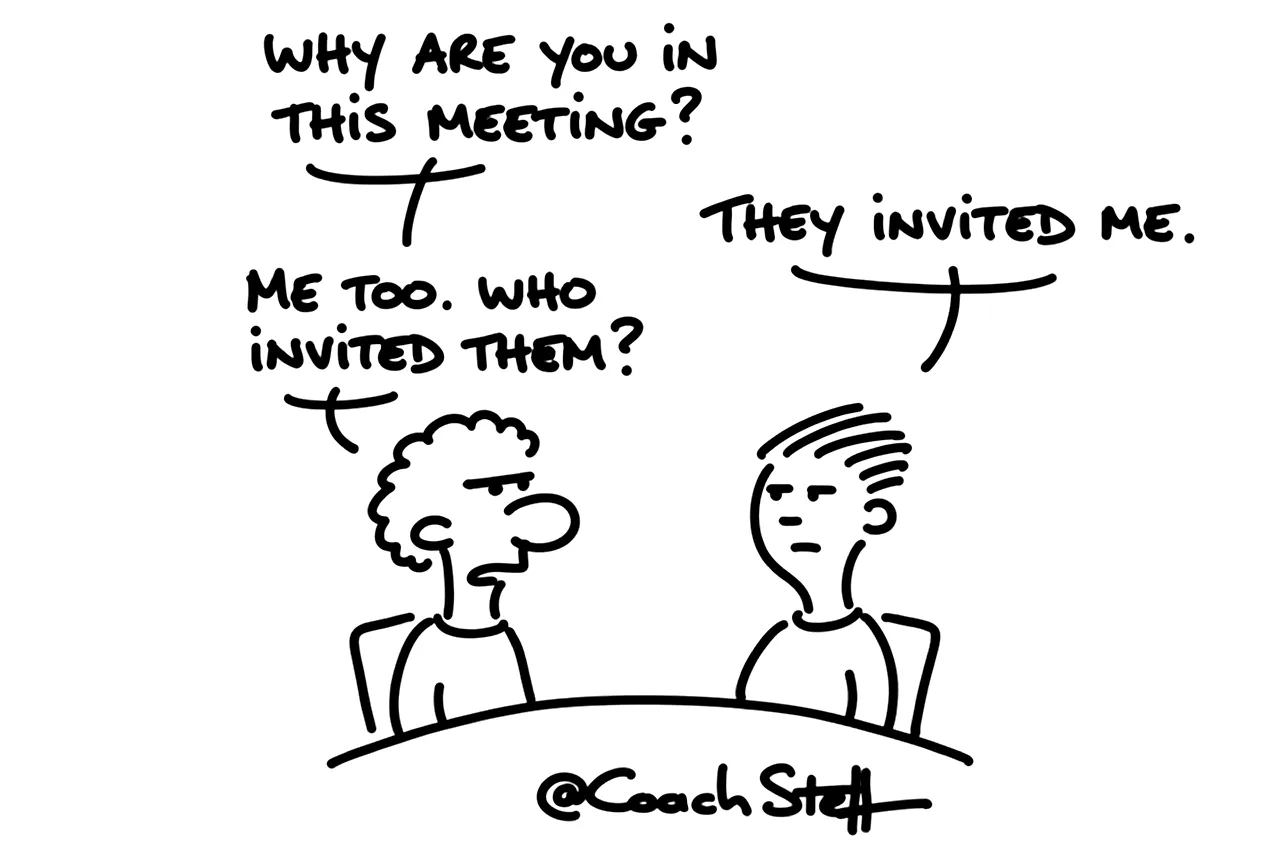
What I tell them then is actually very simple. It is called a meeting request. So it is a question. And you are allowed to look at a question first before you say yes.
At the bottom of this article you will find a prompt with which your AI walks through an invitation with you. Feel free to copy it.
How to put an invitation through your filter
Before you click accept, really read the invitation. What is the goal of this meeting? If that is not already clear, you can ask yourself if you need to be there. Then you look at the rest. Is there an agenda? Is there a start and end time, and is that respected? Do you need a fifteen minute buffer before or after? And above all: what is expected of you? Perhaps the question is actually for your colleague, or for your manager.
Sometimes there is also an alternative. If it is mainly about informing, then you can just say: send me the minutes, I will read them. That way you stay informed, and you keep that hour free for your own work.
It is of course not an all or nothing story. The conversation with whoever sent the invitation counts at least as heavily as your filter. And that is where I think the most interesting part lies.
Frequently asked questions
Keep reading for free
Register free with your e-mail address and read on. Your account opens the free articles in the learning space; the rest is for subscribers, from Learn Plus up.