

This page was translated from Dutch with AI.
One route to your goal is not a strategy
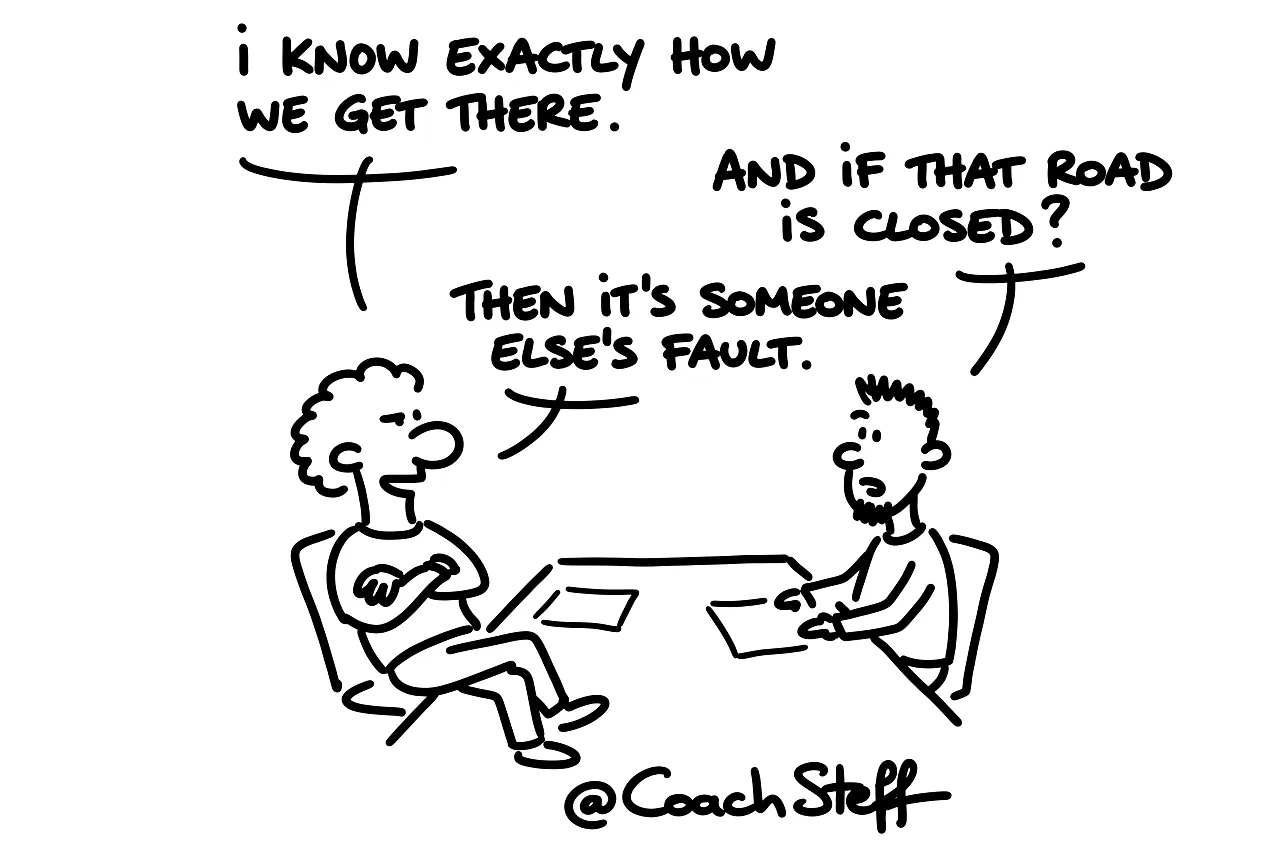
You are driving to an appointment and your navigation system reports an accident on your route. You have to take a detour. That is annoying, but your app immediately gives you a few alternative routes. With your team's goals, things often go differently. There is frequently only one way to the goal. And if that road is closed, everyone comes to a standstill for a moment.
I use that image in a training course on strategic thinking. A goal is actually a little flag you plant on your timeline. It tells you which direction you want to go. How you get there is a second question. And in most meetings, that question gets only one answer.
Copy the prompt at the bottom of this article. It lets your AI guide you through the SCORE model, so you come out of the conversation with a few routes to your goal.
One straight line to your flag
You might know the feeling. The goal is on the board. And then there is one clever person at the meeting table who says they know exactly how we are going to do it. In their head, it is a straight line, right to the goal. And then reality hits, telling you there has been an accident on your route.
What you feel then is called cognitive dissonance. Your expectation no longer matches what is happening. Oh dear, now we have to deviate from our path. That will cost time and money. And whoever had only one route in their head often looks for someone to blame first. It is a bit ironic that the very person who knew best how to do it is the most shocked when things go differently.
Strategic thinking is creating options
That is why I say in that training course that strategic thinking is actually creating options, in people's minds. It is not about having as many options as possible. A few routes or scenarios are enough. That increases the chance that you will actually reach your goal, even if something closes along the way.
If someone asks me what the best scenario is, I ask them back what the worst case scenario is. With one strategy, you are left with nothing if it does not work. The more routes you think of in advance, the calmer you stay when you have to take a detour.
Frequently asked questions
Keep reading for free
Register free with your e-mail address and read on. Your account opens the free articles in the learning space; the rest is for subscribers, from Learn Plus up.
Check your inbox
0 likesNo comments yetRead the comments
Comments
Members comment here and read each other's comments. Register for free or sign in to join the conversation.
Register for free or sign inNo comments yet. What do you take away?