

This page was translated from Dutch with AI.
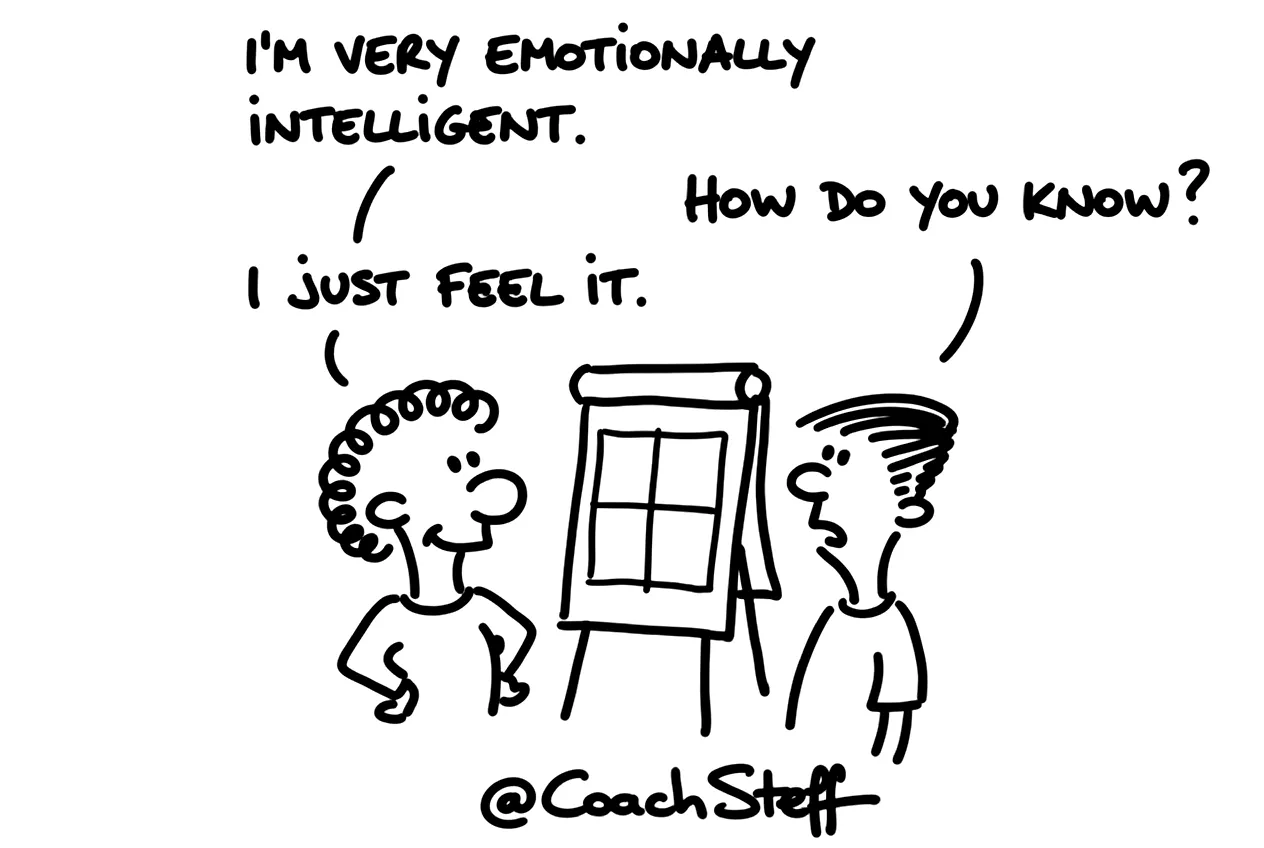
Emotional intelligence fits on one flipchart
'What does emotional intelligence actually mean, according to you?' I start the workshop with that question. The first answers always come quickly. 'Being empathic.' 'Controlling yourself a bit towards people.' Someone said she picks up on how someone is doing faster than others. All correct. And yet it is only a piece of the story every time.
You might hear the term in job vacancies, in an assessment or in a feedback conversation. And then you wonder if you have it, and how you could measure that. That is difficult as long as emotional intelligence remains a big, vague word. It becomes a lot easier when you see which pieces it consists of. And the longer you look at those pieces, the clearer it becomes where you stand yourself.
At the bottom of this article you will find four questions to fill in your own flipchart. Feel free to copy them.
The four boxes of Goleman
The term comes from Daniel Goleman, an American psychologist. He has written a number of thick books about it. In the workshop I asked who had read one. No one, and that is not necessary either. I just summarise them on one flipchart. I am afraid Goleman would not be so happy with that, but it does work.
On that flipchart I draw a matrix. At the top are two columns: emotions in yourself and emotions in others. On the left are two rows: recognising emotions and steering emotions. And with that the matrix is actually complete. You get four boxes. Recognising what you feel. Steering what you feel. Recognising what someone else feels. And steering the emotion in a conversation together with the other person.
If you put the answers from earlier into those boxes, you see something funny. Empathy is mainly in the third box. Whoever controls themselves is in the second. Most people therefore fill in one box with full conviction and call that the whole. That is not so strange either, because there is a difference between being emotional and being emotionally intelligent.
Frequently asked questions
Keep reading for free
Register free with your e-mail address and read on. Your account opens the free articles in the learning space; the rest is for subscribers, from Learn Plus up.
Check your inbox
0 likesNo comments yetRead the comments
Comments
Members comment here and read each other's comments. Register for free or sign in to join the conversation.
Register for free or sign inNo comments yet. What do you take away?