

This page was translated from Dutch with AI.
Are you an expert, coach or facilitator in this meeting?
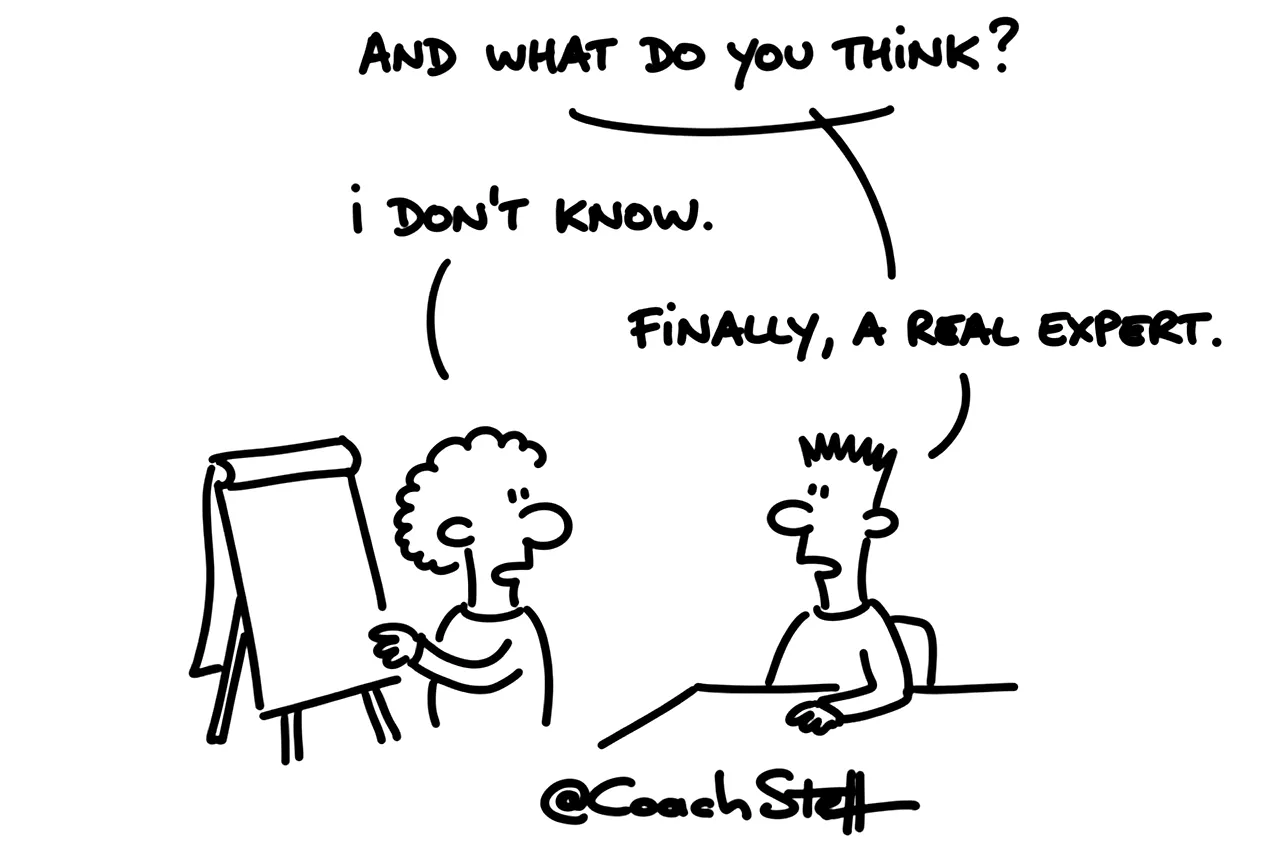
'I actually find it harder to be an expert in a meeting.' A participant said that during the second session of a training course on facilitating meetings. She could not just come up with answers and theories on the spot. She preferred to think at her own pace, and sent an email with all her ideas afterwards. She found facilitating a meeting much easier. 'That requires more people skills than technical knowledge,' she said.
Perhaps you recognise the opposite. You have to lead a meeting, so you prepare your content. You make slides, you list your points and you explain everything. And the others listen. Or they do not listen and check their emails in the meantime. You have then said everything you wanted to say, and yet very little comes out of it.
That is usually not your fault. We have actually never learned how to facilitate a meeting. We just copy what we have always seen others do. And what we have seen most often is an expert doing the talking.
At the bottom of this article you will find a prompt to help you prepare your next meeting by role. Feel free to copy it.
What the group already knows determines your role
The model I use in my training courses starts with one question. How much knowledge and experience is already present among the people around the table?
If they know little about the subject, then you are the expert. You explain, you provide context, you make the biggest contribution. That is perfectly fine, because that is what they came for.
If they already have some knowledge, but are not quite there yet, then you become a coach. You notice that a little door in their head is slightly ajar. Then you do not push it open yourself. You ask open questions, you challenge them a bit, and you let them take that step themselves. That sticks much better than when you tell them the answer.
And sometimes there is more knowledge in the group than you have. Think of a local council and the associations that use a site. They know their own situation better than anyone else. Then you take a step back and become a facilitator. You get the discussion going, you keep them on topic, and you help bring their input to the surface.
Frequently asked questions
Keep reading for free
Register free with your e-mail address and read on. Your account opens the free articles in the learning space; the rest is for subscribers, from Learn Plus up.