

This page was translated from Dutch with AI.
Let your AI think in English, even if you work in Dutch
In the workshop I sometimes show the instruction of my own agent. People then expect something complicated. What they notice most is one little sentence at the top: you do all the work in English. You think in English and you write your intermediate steps in English. And you brief other agents in English too.
And then comes the question I see coming: 'Steff, you write everything in Dutch, right?' That is true. My articles and my emails are in Dutch, and my workshops too. Only what my AI does along the way to get there happens in English. And there is a very practical reason for that.
If you want the same sentence in your own instructions, copy the prompt at the bottom of this article.
How an AI sees a word

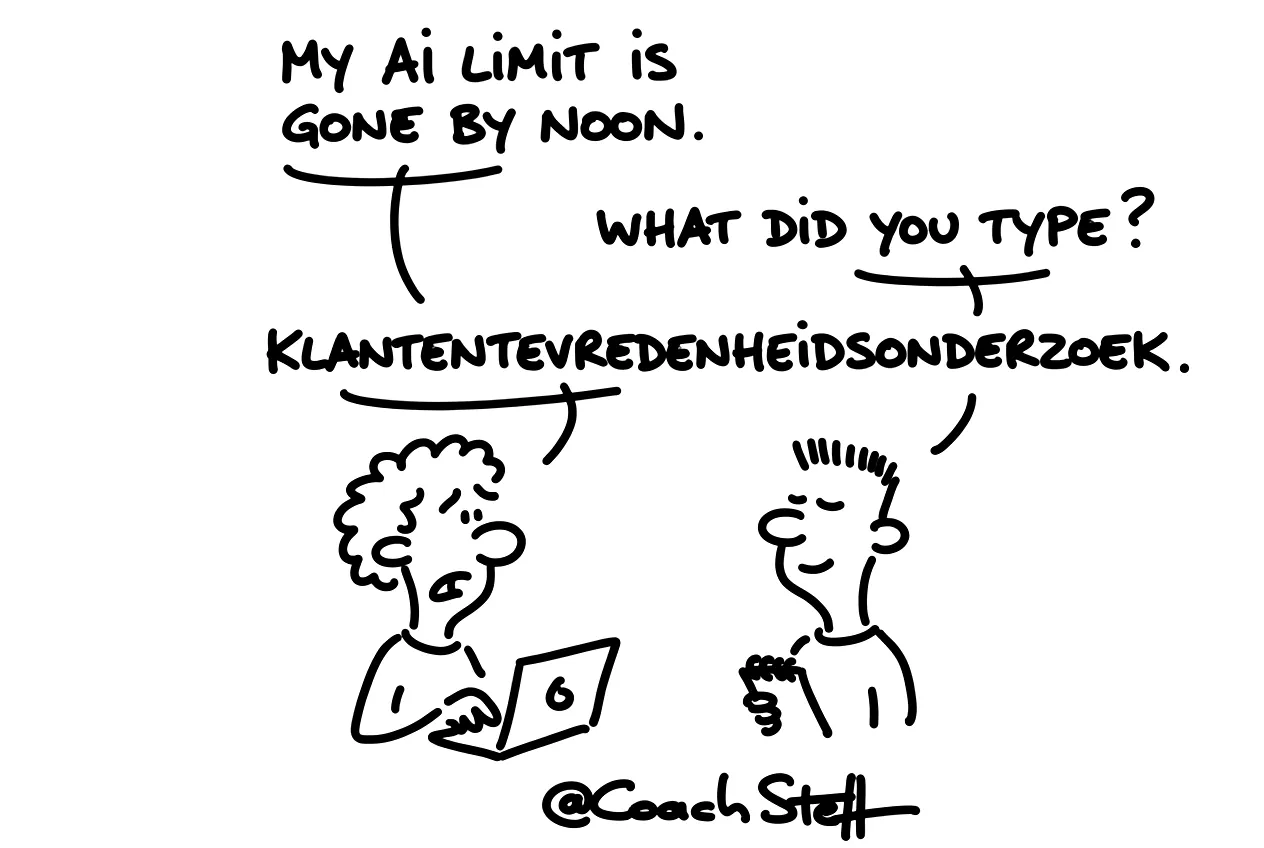
An AI reads words a bit differently than you do. It cuts text into pieces, and we call those pieces tokens. A token is a word or a part of a word. Short and frequently used English is often one piece per word. It cuts Dutch words into pieces much more often.
Take the word handdoek. For an AI, that contains hand and doek, plus the whole thing. And that is still a short word. We Dutch speakers are champions at sticking words together. Think of klantentevredenheidsonderzoek or personeelsadministratie. Each of those words is cut into a row of pieces.
Frequently asked questions
Keep reading for free
Register free with your e-mail address and read on. Your account opens the free articles in the learning space; the rest is for subscribers, from Learn Plus up.
Check your inbox
0 likesNo comments yetRead the comments
Comments
Members comment here and read each other's comments. Register for free or sign in to join the conversation.
Register for free or sign inNo comments yet. What do you take away?