

This page was translated from Dutch with AI.
You wake up at three o'clock, and that is normal
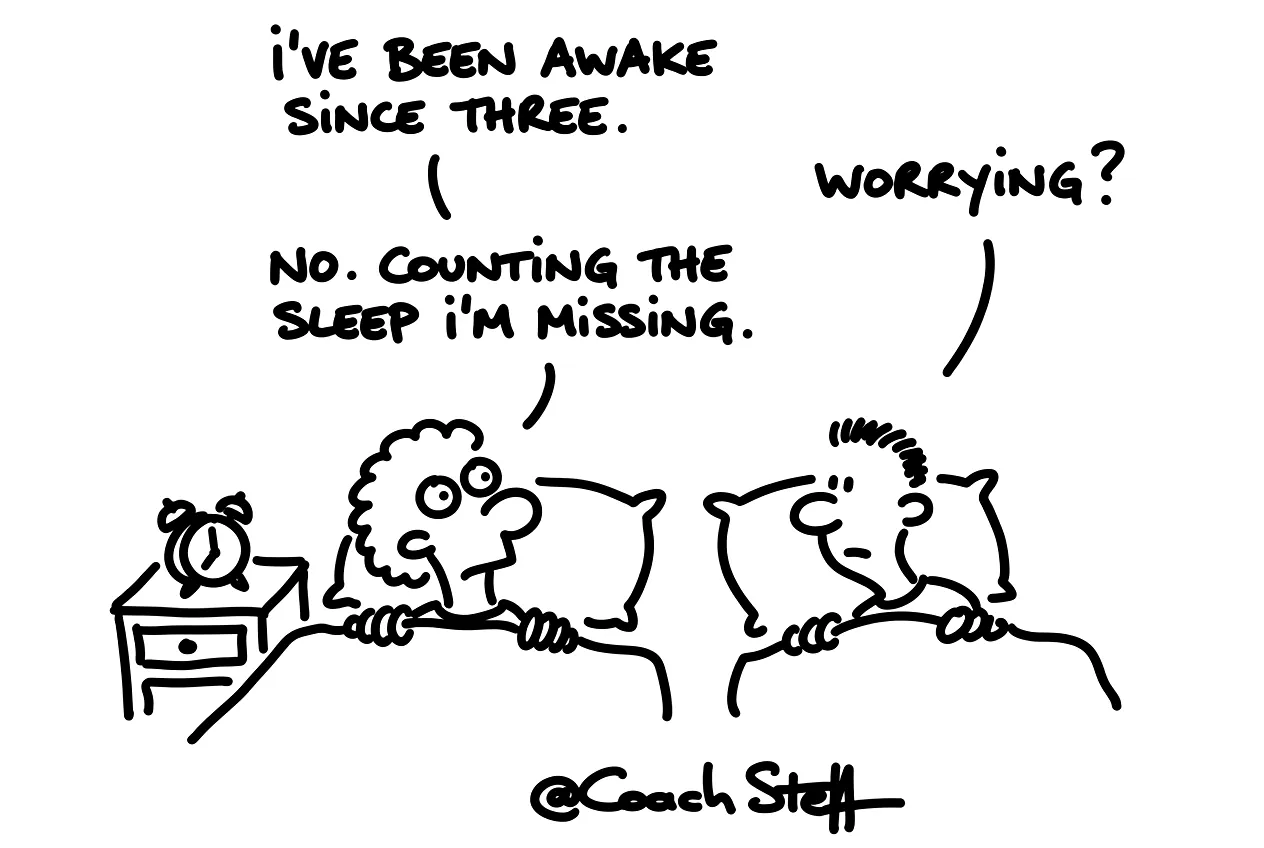
You might know the feeling, waking up in the middle of the night, looking at the clock, and seeing it is three o'clock. And before you know it, you are doing the maths. If I fall asleep right now, I still have four hours. Tomorrow I have that meeting, so oh dear, I really need to sleep.
In a training course on emotional intelligence, I once asked: 'Who sometimes worries at night?' I think almost everyone knows that feeling. And I can reassure you, because waking up itself is actually very normal. What keeps you awake is usually worrying about it.
Copy the night card at the bottom of this article. You can put it on your bedside table for next time.
Eight hours in one go is quite new
We often hear that you have to sleep for eight hours. Seven to eight hours is also a healthy guideline. But the idea that you have to do that in one block is actually quite recent.
In ancient writings, with the Romans and until late in the Middle Ages, people described a first and a second sleep. They woke up at night, just like animals do. They would go to the toilet, and sometimes they even went outside to hit a ball around with the neighbours. And after that, they just went back to sleep. I think that is a wonderful image, although I would not immediately suggest it to my neighbours at three in the morning.
What happens in your sleep explains a bit why that works. The first part of the night contains your deepest sleep. That is the sleep with the highest quality. After that, you alternate between shallow sleep and dream phases. And occasionally you wake up for a moment.
That block of eight hours came with the industrial revolution. In a factory, it is not very convenient if everyone takes a nap after midday. That drowsy feeling after eating is very natural. Animals just go to sleep then, and we drink coffee. I sometimes say that the industrial revolution and coffee went hand in hand.
Frequently asked questions
Keep reading for free
Register free with your e-mail address and read on. Your account opens the free articles in the learning space; the rest is for subscribers, from Learn Plus up.
Check your inbox
0 likesNo comments yetRead the comments
Comments
Members comment here and read each other's comments. Register for free or sign in to join the conversation.
Register for free or sign inNo comments yet. What do you take away?