

This page was translated from Dutch with AI.
What goes into a good meeting report
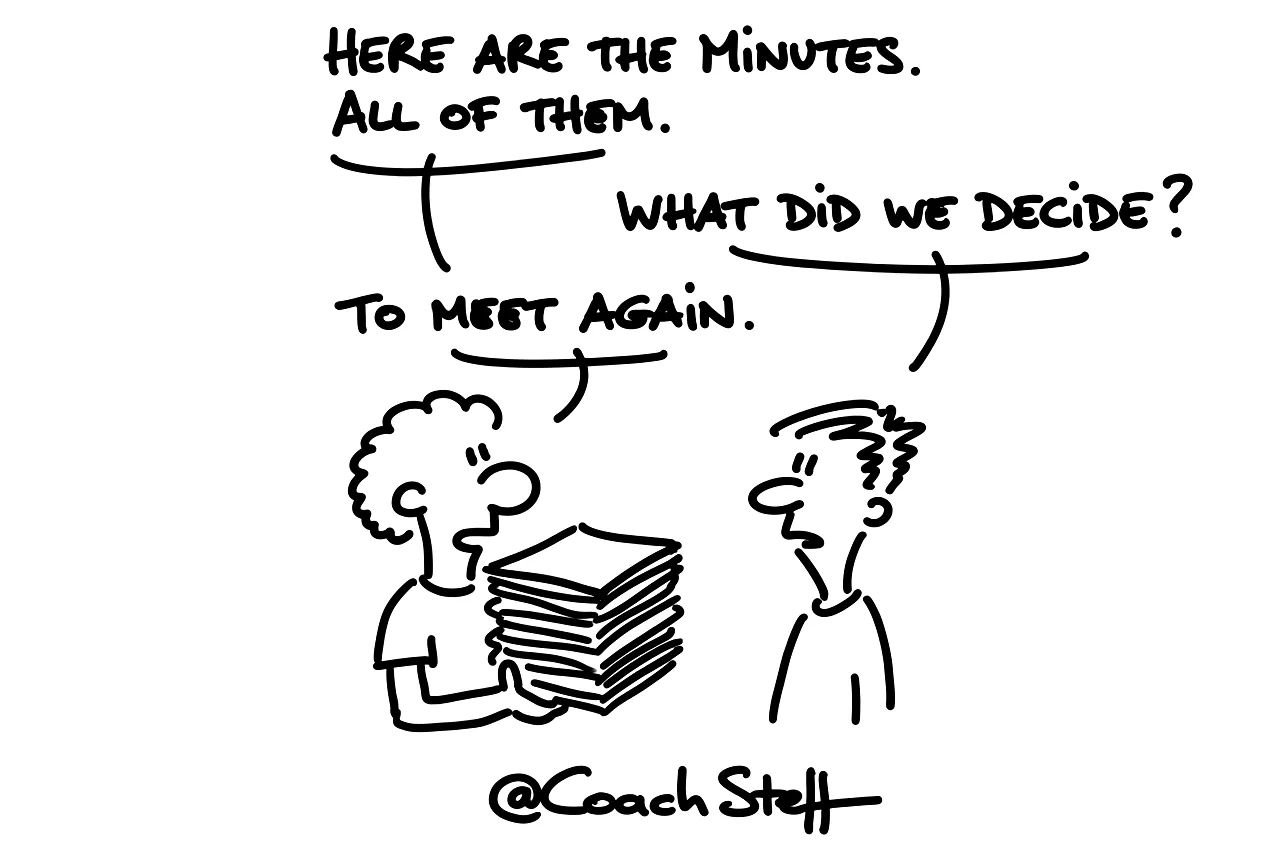
You probably know them, the meeting reports that almost nobody reads from beginning to end. A few pages long, with who said what, and who reacted to it, and what the counterarguments were. And when you close it after three paragraphs, you still do not know what has actually been decided. Let alone what you have to do by next week.
I see those kinds of reports mostly at political institutions and at some non-profit organisations. Companies fortunately do it less, but it creeps in everywhere. In a training on meetings, I therefore showed a simple structure. Five sections, in a fixed order. And the last one brings you nicely back to the start of the next meeting.
At the bottom of this article you will find a prompt that pours your notes or a transcript into that structure. Feel free to copy it.
First the decisions, then the actions
At the top is what has been decided. The whole discussion does not need to be in there. Whoever was not there mainly wants to know what the group concluded.
Then come the actions. And that is where I think things go wrong most often. 'A colleague will pick this up' is not an action. It must state what that person is going to do, and by when we expect a result or feedback. That person must also be able to promise that themselves. So it cannot be a case of 'he will do that, surely?'. Because perhaps he already has a list of unfinished tasks in his head. Only when he says 'I will have this ready by the next meeting' do you have a commitment.
Frequently asked questions
Keep reading for free
Register free with your e-mail address and read on. Your account opens the free articles in the learning space; the rest is for subscribers, from Learn Plus up.