

This page was translated from Dutch with AI.
Read the deviation, not the gesture
I once sat at a table with the CEO of a company where I was going to deliver a leadership programme. The conversation with HR had gone smoothly. Then he came in, clearly stressed, sat down, opened a folder and said: go ahead. While I was talking, his eyes constantly darted in all directions. After a few minutes, he closed the folder. 'I know enough.'
I knew at that moment that the conversation was not going well. And I also knew why.
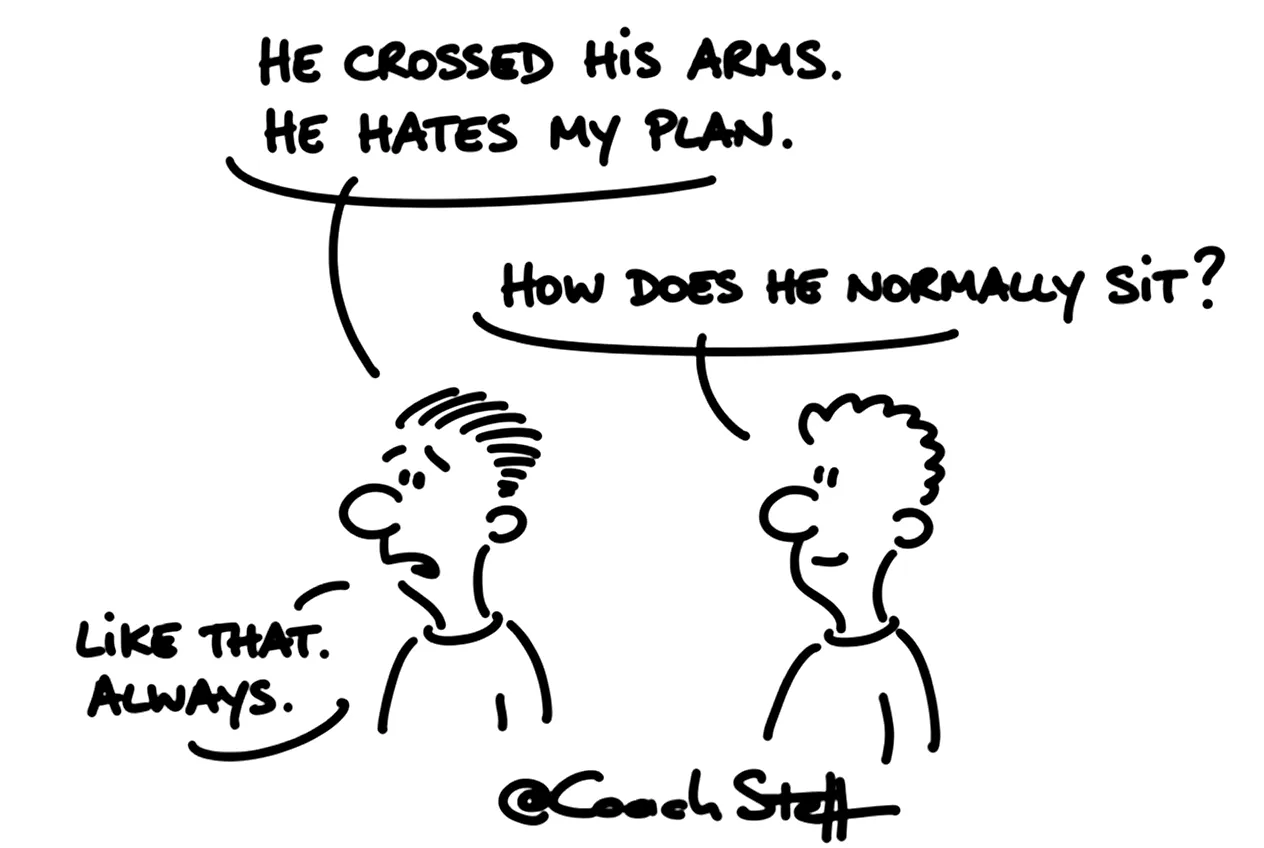
The normal dynamics of a conversation
In a normal conversation, certainly in our Western culture, the speaker looks in all directions. That makes sense, because they are building a story. The listener does the opposite. They make contact and hold it, because they do not want to miss anything.
With that CEO, it was the other way around. I was talking, and he looked away. He was not listening, he was in his own thoughts. So I said, while he was already half standing up, that I still had a few questions. Because I noticed that something was occupying his mind, something he hoped to hear and had not asked about yet.
He looked at me. 'You can read my mind, can't you?' I briefly explained what I had seen. His answer: our people need to be able to do this too.
Keep reading for free
Register free with your e-mail address and read on. Your account opens the free articles in the learning space; the rest is for subscribers, from Learn Plus up.